
Kunal Kamra Got Death Threats, FIRs, and an Airline Ban. He Feels Nothing.
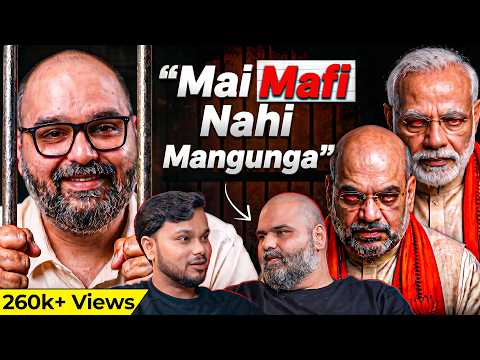
What India’s most controversial comedian taught me about fear, freedom, and why good humor is already dead
A conversation with Kunal Kamra, standup comedian and political satirist whose work has triggered parliamentary privilege committees, Supreme Court contempt cases, and enough FIRs that he has genuinely lost count.
There is a moment early in every conversation with someone truly fearless where you realize the word fearless does not quite fit.
Fearless implies the absence of fear. What Kunal Kamra has is something more precise. He has simply decided that the things most people fear are not the things worth fearing.
Death threats? He has normalized them after eight years. Jail? He has not broken any law, so the question does not register as meaningful. An airline ban? A unique experience. A parliamentary privilege committee? An interesting chapter. His address being leaked online after his first viral video in 2017? That one hurt. But it also clarified something important for him about who he was and why he was doing what he was doing.
What actually scares Kunal Kamra is riding a bike without a helmet. And the cyclone that destroyed three years of farming work in Pondicherry.
He is afraid of the things that are genuinely dangerous. He is indifferent to everything else.
That distinction, I came to understand over the course of our conversation, is the foundation of everything he does.
Part 1: The Accidental 30 Minutes That Started Everything
Kunal started doing comedy open mics in 2013. In those days, open mics were competitions. Win one and you got a seven-minute weekend spot. Lose and you went home and practiced more.
He showed up at a Blue Frog show purely to watch. Another comedian, Karunesh Talwar, was supposed to perform a 30-minute set but had received the wrong date and time. The venue had given him different information. When they realized Karunesh was not coming, they looked around the room and found Kunal.
They asked him to fill in.
He had never done 30 minutes. He told the audience exactly that. He said, the person who was supposed to be here could not make it due to a miscommunication, I am here instead, this is my first 30 minutes, let us see how this goes.
It worked decently well. After that, spots started coming regularly.
“I think we were lucky,” he told me. “If I were starting now, I don’t think it would happen the same way.”
He uploaded his first video in 2017. By then he had already traveled to Delhi, Mumbai, Pune, Bangalore, and Chennai just for standup. No videos yet. Just the work, city by city, stage by stage.
“That is unheard of now,” he said.
Part 2: The 13 Years Before Comedy
Before comedy, Kunal spent roughly 13 years in advertising. He officially quit his job in January 2018, by which point he was already well known from his online videos.
He dropped out after 12th standard. His parents knew he had dropped out. What took three years to communicate was the part where he was never going back to complete his education.
“I was never going to go back to complete it. Communicating that took three years.”
He moved out at 23 or 24. He was clear that this had nothing to do with a girlfriend or marriage providing a socially acceptable excuse, which he noticed was a common pattern among his friends.
“A lot of people want to live independently, they want to move out, but they wait for a girl to come into their life or a wedding so they can use her as the reason. That was never my perspective.”
He left because he was independent and wanted to live independently. Simple.
About advertising, he was direct: “95% of advertising is a non-creative profession.”
Part 3: On Being Called the Most Controversial Comedian
When I asked him how it feels to be labeled India’s most controversial comedian, his answer was three words.
“Nothing. Doesn’t matter.”
He has had FIRs filed against him, shows cancelled, an airline that tried to ban him from flying, death threats, his home address leaked on the internet. He has faced a Supreme Court contempt case and a parliamentary privilege committee.
None of it produces fear.
His explanation for this is not bravado. It is almost philosophical.
“When you make a mistake that you genuinely know was a mistake, like driving drunk and causing an accident, then you should feel fear and you should course correct from that point. But when you have not broken any law and you have not done anything you are ashamed of, what exactly are you afraid of?”
He also made a point I have been thinking about since.
“As an artist, every unique experience that comes to you is yours. American and British comedians make jokes about flight delays and airline food. I have material that no comedian in the world has. That is a privilege. That is a rare thing.”
He means it. He does not say it to sound calm. He says it because that is genuinely how his mind processes the situation.
Part 4: The Arnab Goswami Flight Confrontation
Kunal referenced a documentary filmmaker named Michael Moore and his first film Roger and Me, in which Moore spent years trying to get the CEO of Ford to comment on what shutting down a Michigan plant had done to the community. He just kept showing up wherever the CEO was.
Kunal thought about journalists in India the same way.
“They walk around with Z-category security. They say anything they want on television. They have called people terrorists and naxalites without consequence. Courts open on Sundays for them when they need bail. Who is holding them accountable?”
So he got on a flight to Lucknow and found Arnab Goswami seated on it. He approached him without a camera first. Then a second time without a camera. Then with a camera.
He wanted to talk about the nation. Arnab always talks about the nation on television.
“We have two and a half hours to Lucknow. What else are you going to do? Come stand near the bathroom and let us discuss what the nation means, who is a nationalist, who is an anti-national.”
Arnab did not respond on camera. The person who routinely confronts everyone on television would not answer a single question when the camera was on him.
“He talks about the national interest. I just wanted to discuss the national interest. He was busy.”
The footage got everywhere.
Part 5: The Economy He Sees That Others Miss
One of the most interesting parts of our conversation was about something most people do not connect: the invisible cost of convenience.
Kunal laid it out methodically.
The quick commerce apps like Blinkit and Zepto are eliminating the kirana store, the same way food delivery apps damaged restaurant businesses. He asked a simple question: what problem were these apps actually solving?
“Was there ever a time in India when you could not get milk and curd within 20 minutes? Was there a period like that? No. So what problem did they solve?”
What they did instead was take an entire layer of retail employment and convert it into delivery work. The salesmen at retail clothing shops, the people managing stock, the ones who changed mannequins every morning to attract customers. All of them are now on bikes delivering other people’s orders.
“The whole country is busy moving milk and curd from one pincode to another.”
He pointed to his own father’s medical shop as an example of what GST has done to small retailers. The system for returning expired medicines now requires going through the exact same distributor the medicine came from, with computerized tracking at every step. A small chemist who does not have a sophisticated computer system simply stops stocking variety. Half his shelves are empty.
The organized chains survive. The neighborhood shop does not.
“When people who have no better option are forced to work for these platforms, and you call that a business model, you are building an economy on exploitation.”
He was not arguing that the technology is evil. He was arguing that the human cost is invisible in the way these businesses are celebrated.
Part 6: Two People Selling, Two People Buying
On politics, Kunal does not do ambiguity.
“No matter what you are discussing, it comes back to the same place. Two people are selling this country. Two people are buying it.”
I asked who.
“Modi and Amit Shah are selling. Adani and Ambani are buying. There is no one else at that level. Smaller players exist, but the moment Adani or Ambani gets interested in your business, they will absorb it.”
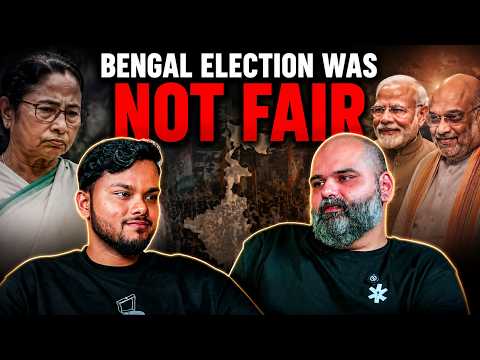
On the Bengal election results: “It is not a free and fair election. I do not think so. I know so.”
On whether BJP ever listens: “BJP listens. But only to the people who will prostrate themselves completely. Those people they hear.”
On why 230 out of 240 BJP MPs say nothing publicly: “They do not have courage. They secure their position, their land, their children’s future. But for the country, there is no courage left in them to open their mouths.”
On the Bengal election specifically, he raised the point that in 2024 the BJP did not get a clear majority and had to depend on alliances. He argued that a weaker government, paradoxically, serves more people.
“The stronger the government, the weaker the people. The weaker the government, the stronger the people. When you need 15 parties to govern, you have to serve more interests than when you have 303 seats on your own.”
Part 7: On the Latent Case and Ranveer Allahbadia
When I asked about the Latent show controversy and Ranveer Allahbadia, Kunal was characteristically direct.
“You are not a victim. You are the accused. What happened to you happened because of your own foolishness.”
He was particularly frustrated by the victim narrative that Allahbadia built afterward.
“Comedians lost shows because of what happened on Latent. Real comedians doing this as a full-time profession had their work affected. And then you come and milk that too? Tell us what you learned? Sit with it.”
He called Allahbadia “a contraceptive of creativity” and stood by it fully when I asked him again.
His specific criticism was about the interview format itself: someone sits across from Allahbadia and talks, and he just keeps saying yes and nods along and lets people push whatever they want to push without any pushback or curiosity.
“He lets people peddle propaganda and he just keeps failing upwards. Comedy is not his forte, he said himself. Then someone please tell me what his forte is. I will give him ten hours and a piece of paper. List your forte.”
Part 8: Why Good Humor Is Already Dead
This is where the conversation turned genuinely dark in the way only honest people allow a conversation to go.
I asked Kunal what he thought of the current state of comedy in India.
“Good humor is already dead.”
He said there are maybe ten comedians in India who are doing comedy for comedy. Everyone else is doing it to position themselves, to build connections to Bollywood, to chase numbers.
“Innovation leads to capital. Capital does not lead to innovation. If your aspiration is to play the best friend of a Bollywood actor, and comedy is just the vehicle you are using to get there, I do not want to sit with you and discuss art.”
He went further on the structural side. Management companies that sign comedians have contracts, he said, that read like something written by a cultural ministry he would not want to name. What you cannot do, what you cannot say, what liability is yours if the company suffers because of your content.
“These contracts are like signing a deal with the Taliban’s cultural ministry.”
He said this will produce a generation of what he called sarkari comedian types. Rule-followers. Safe players.
On Kapil Sharma, he was precise: “I do not understand that type of comedy. When satire is not an option, misogyny is all comedy can bring to the table. 95% of comedy is misogyny.”
His funniest Kapil Sharma joke, he said, is the one Kapil made about himself without realizing it: “My upbringing is bad. What should I do?”
Part 9: What He Is Actually Afraid Of
Near the end of our conversation, I pushed him on fear again.
He told me clearly: he does not fear death threats because thugs do not have courage. He does not fear jail because he has not broken any law. He does not fear the privilege committee because there is a court system he can use.
“I will go to court. There is a court.”
What he does fear is becoming irrelevant in the way that creeping age makes artists irrelevant.
“At 45 or 50, all the young people will look at me and think, what an uncle perspective. And I have made many jokes about uncle perspectives. So becoming one is inevitable.”
That is his fear. Not death. Not prison. Not powerful people who dislike him. Becoming the thing he once made fun of.
Part 10: The Advice Nobody Else Will Give Young Comedians
In the rapid fire section I asked him what advice he would give to someone starting standup today.
His answer was not about craft or technique or how to write jokes. It was about life choices.
“The choices you make in your life will push you toward being more original and more creative. Choose the right management. Choose the right friend circle. Choose the right comedians to get inspired from. Do not chase numbers. Chase creativity.”
He added something that I think applies well beyond comedy.
“Comedy is a self-exploration tool. If you are doing it honestly, you will understand yourself better. That is what it is really for.”
And on what he himself will be doing in two or three years: more of what he enjoys. A few more formats he has not tried yet. Some farming in Tamil Nadu, if he can figure out a model that makes sense. Documentaries over comedy specials, because documentaries shaped how he sees the world.
“Fiction ruined me. Documentaries saved me.”
The One Thing
If I had to take one idea from this entire conversation, it is this:
Most people are afraid of the wrong things.
They fear judgment, public opinion, the powerful, the loud, the threatening. These fears make them smaller over time. They edit themselves, position themselves, collaborate strategically, and end up producing something that resembles work but does not actually risk anything.
Kunal Kamra is afraid of bikes without helmets and cyclones. He respects the things that are genuinely dangerous. He is indifferent to everything else.
And that indifference, it turns out, is not recklessness. It is the most precise form of courage there is.
More from the blog

Subscribe to our newsletter
The best new roles, resources and must-watch episodes — in your inbox every week. No spam, unsubscribe anytime.