
Ayushman Bharat Ka Idea Kaise Aaya? - Anil Swarup
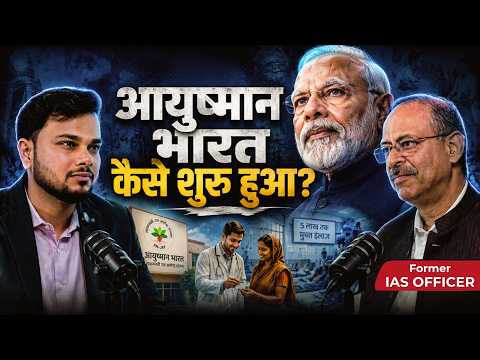
There is a sentence Anil Swarup said on our podcast that, for the first time, gave me the inside account of how India’s largest public health insurance programme actually came to exist.
“Us din Ayushman Bharat paida hui. Naam usko baad mein diya gaya.”
That day, Ayushman Bharat was born. The name came later.
The 38-year IAS veteran, architect of the original scheme that became Ayushman Bharat, was telling the story of one of the most consequential policy meetings of the last decade.
Let me walk you through what he said.
The Original Scheme
The story begins under the UPA government with a scheme called Rashtriya Swasthya Bima Yojana, RSBY.
“Yeh ek yojana thi Rashtriya Swasthya Bima Yojana jiska antarrashtriya khyaati mili.”
This was a national health insurance scheme that won international recognition. Anil Swarup was the architect.
The 2014 Killing
When the government changed in 2014, the standard pattern of Indian policy continuity broke down.
“Jab shaasan ka parivartan hua to ek teen-sadasyiya samiti banaayi gayi sachiv ki. Aur un sachivon ne aisa likha ki yeh scheme jo hai theek nahi hai.”
A three-member committee of secretaries was formed. They concluded the scheme was not good. The reasons they gave were limited.
“Teenon mein se kisi ko idea to tha nahi. Unhone socha ki nahi, sarkar hai, pichli sarkar ki scheme hai, to thok do isko.”
None of them had any idea about it. They thought: previous government’s scheme, kill it. So they killed it.
This is the part of Indian policy continuity that almost nobody discusses publicly. A working programme can be killed not on its merits but on its association.
Three Years Of Nothing
The killing did not produce a better alternative. It produced silence. Two to three years, nothing happened. The health insurance gap that RSBY was filling went unaddressed.
The Slow Realisation
Then the new government began to understand what it had killed.
“Dheere dheere unko samajh mein aaya hoga ki bhai isme dum hai scheme mein.”
Slowly they realised the scheme had substance. A working programme had been killed for partisan reasons. The killing produced no replacement. The void was visible. The original architect was still in government.
The Phone Call
“Pramukh Sachiv Pradhanmantri ka phone kiya ki Anil, hum pichle teen saal se koshish kar rahe hain Pradhanmantri ko batane ki. Thoda samjha nahi pa rahe hain. Tum aakar samjha do.”
The Principal Secretary to the Prime Minister called. We have been trying for three years to explain to the PM. We cannot. You come and explain.
Anil Swarup was the Education Secretary at the time. He went anyway.
The Meeting
That evening, the Health Secretary presented first. The content was the same as what Anil Swarup would have said. But Modi had a specific concern.
“Pradhanmantri thoda unko insurance company se thoda naarazgi thi.”
Modi had some annoyance with insurance companies. His experience suggested they did not do good work.
Then the PM turned to Anil Swarup.
“Aap bataaiye Anil ji, aapki kya raai hai?”
Same question. Same content. But the presentation was about to change.
The Four-Angle Framework
The framework Anil Swarup used is the part that should be on every executive communication wall in India.
“Maine unko bataaya ki kyon aapke liye uchit hai, logon ke liye uchit hai, raajneetik drishtikon se uchit hai, aarthik drishtikon se uchit hai.”
Four angles. The personal angle (for you). The public angle (for the people). The political angle (for elections). The economic angle (for fiscal sustainability).
This is the executive communication insight that almost no Indian senior bureaucrat articulates publicly. The same policy needs different justifications for different listeners. The skilled communicator builds all the angles upfront.
The 15-Minute Listening Stretch
The observation about how the Prime Minister received the framework was striking.
“Log jaante hain ki bada achha bolte hain Modi ji, lekin sunte usse achha hai. Bahut achha, ek tak sunte rahe bus.”
People know that Modi ji speaks well, but he listens even better. He kept listening intently.
This is the part of the segment that runs against the public image. Modi is widely known as an effective speaker. Anil Swarup’s contention is that the underrated skill is his listening.
For 15 minutes, the Prime Minister listened intently to a presentation he had been struggling to absorb for three years. The presenter’s framing was the difference.
The Decision
“Uske baad bole haan Anil ji, aap sahi keh rahe hain. Us din Ayushman Bharat paida hui.”
After that he said: yes Anil ji, you are right. That day Ayushman Bharat was born.
The Joint Secretary Aftermath
The PMO Joint Secretary caught Anil Swarup on the way out.
“Sir aapko pata hai, naaraaz ho jaate the. Aapne phir bhi apni baat keh di.”
Sir, you knew he gets angry. You still said your piece.
Anil Swarup’s response was the principle that should be in every senior professional’s playbook.
“Dekho bhaiya, na mujhe aaj kuch chahiye, na retirement ke baad kuch chahiye. Jo maine theek samjha, keh diya.”
Look brother, I do not want anything today. I do not want anything after retirement. I said what I thought was right.
This is the independence principle. The freedom that comes from not wanting anything from the system you are speaking to.
The Jalebi Metaphor
The closing of the segment was the metaphor that I have not been able to stop thinking about.
“Aap apna maal bechne ja rahe hain. Jisko maal bechna hai, usi ke hisaab se maal bechenge. Yeh thodi na kahenge meri jalebi hai pasand aaye khao na khao.”
You are going to sell your goods. You sell them according to what the buyer wants. You do not say: this is my jalebi, take it or leave it.
“Usko kam meethi jalebi pasand hai, zyada meethi pasand hai. Narangi rang ki chahiye, gulabi rang ki chahiye, kis rang ki chahiye? Kitni tali hui chahiye? Plate mein chahiye, done mein chahiye.”
They want less sweet jalebi. More sweet. Orange or pink. How fried. In a plate or in a leaf bowl.
The product is the same. The presentation is different.
“Yeh aapko samajhna padega ki usko kya pasand hai. Baat jo hai to jalebi. Lekin aap prastutikaran kaise kar rahe hain bahut mahatvapurna hai.”
You have to understand what they like. The substance is jalebi. But how you present it is very important.
The Universal Application
The jalebi principle applies far beyond Indian bureaucracy.
For founders pitching to investors, the same content needs different framings for different investor profiles. The growth-stage investor wants to hear about scale and market dominance. The early-stage investor wants to hear about product-market fit and team. The same business needs different jalebi.
For executives pitching to boards, the same business plan needs different angles for the financially-oriented board member, the operations-oriented board member, the brand-oriented board member. The substance is identical. The framings have to vary.
For salespeople closing deals, the same product needs different value propositions for different customer personas. The CFO buyer wants ROI. The end-user buyer wants ease of use. The IT buyer wants integration. Same product. Different jalebi.
For managers asking for budget, the same project needs different selling points for the cost-conscious CFO, the growth-conscious CEO, the risk-conscious COO. Same ask. Different angles.
The Independence Principle Has Universal Application Too
The “I do not want anything” principle is the harder one to internalise.
In most professional lives, the calculation is: what do I need from this person, and how does that shape what I say to them. The senior officer who wants the next posting cannot say things that might cost them the posting. The senior executive who wants the next promotion cannot say things that might cost them the promotion. The fear of loss constrains the speech.
Anil Swarup’s principle is to remove the constraint by removing the want. If you have decided in advance that you want nothing from the system, the system cannot bend your speech.
This is harder than it sounds. The “I do not want anything” position is psychologically demanding. Most people want something. The achievement is to make peace with not getting it, in exchange for the freedom to say what you actually think.
What I Took Away
Three things from this segment will stay with me.
The Ayushman Bharat origin reveal. India’s largest public health insurance programme had a three-year dormancy because the previous version was killed for partisan reasons. The revival was due to a single 15-minute presentation by the original architect.
The four-angle framework. Any pitch to senior decision-makers should cover four angles: why it is right for them personally, for the constituency they serve, for the political environment, for the economic sustainability.
The jalebi metaphor. The substance and the presentation are not the same thing. The seller who insists on their preferred version of the substance loses the sale.
Watch the full episode here:
More from the blog


Subscribe to our newsletter
The best new roles, resources and must-watch episodes — in your inbox every week. No spam, unsubscribe anytime.