
When Comedy Meets Power: Kunal Kamra on Fear, Free Speech, and Political Criticism in India
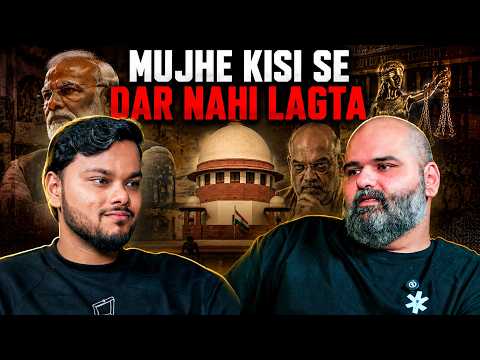
There is a specific kind of courage required to be a political comedian in India today.
Not the courage of the battlefield or the boardroom. The quieter, more corrosive kind. The courage to say something publicly, watch it become a firestorm, absorb the fallout, and then say something again.
Kunal Kamra has been doing exactly that for years. FIRs. Death threats. Airline bans. Outrage cycles that seem to have no beginning and no end. In a recent conversation, he sat down to talk about all of it, openly and without softening the edges.
What emerged was not just a political discussion. It was a study in how a person continues to speak publicly when every public statement carries a cost.
1. Fear Is Not What Most People Think It Is
The most striking idea in the conversation comes early, and it reframes everything that follows.
Kunal Kamra does not define fear the way most people do. For him, fear is not simply the presence of danger. Fear is the emotional response to genuine ethical failure.
He offers a concrete example. Drunk driving. Causing an accident. Making it worse afterward. In that situation, fear is proportionate. A real mistake was made, and the internal response reflects that.
But criticism? Satire? A joke about a politician? That does not create the same internal weight. Because if you believe what you said is honest, the emotional architecture of guilt is simply not there to produce fear.
This is a quietly radical idea. Most public figures under pressure communicate a kind of performed defiance, which only makes sense if they are secretly afraid. Kamra's argument is more fundamental: he is not performing bravery. He is describing what happens when you are not carrying the psychological weight of wrongdoing.
Whether you agree with him or not, it is an idea worth sitting with.
2. How Repetition Changes Everything
There is a second dimension to how he describes his relationship with threats, and it is more psychologically honest than most people admit publicly.
Threats did not stop being unpleasant. They became familiar.
Death threats, viral outrage campaigns, legal notices, public attacks: the first time any of these happens, it lands with full force. Over time, the emotional intensity changes. Not because the threats become less real, but because the nervous system recalibrates what it treats as a genuine emergency.
What he finds genuinely unsettling is more primal. Riding without a helmet. Extreme weather. Physical uncertainty. Natural danger. Human-made institutional threats, however loud, have become psychologically categorised differently.
This is not a boast. It is a description of a specific adaptation that happens when a person operates under sustained public pressure over a long period.
3. The Privilege of Turning Experience Into Perspective
One of the most interesting turns in the conversation is when he shifts away from politics entirely and talks about what it means to be an artist.
His argument is this: most people live privately, experience privately, and struggle privately. Their lives are real and full, but they remain largely internal. Artists, by contrast, have both the capacity and the obligation to convert lived experience into something expressible.
Jokes. Commentary. Stories. Public conversation.
This creates a particular relationship with difficult experiences. Where most people might want to avoid controversy, an artist has an additional lens through which to process it. The FIR becomes material. The outrage cycle becomes observation. The threat becomes context for something worth saying.
He puts it directly: most people spend their entire lives within limited social and geographical environments. Artists encounter public reaction, ideological conflict, travel, and criticism from many directions. That breadth of experience produces a wider view of how society actually functions.
The implication is not that artists are superior. It is that the experiences they accumulate serve a different purpose than they might for someone living privately.
4. Criticism Is Not the Same as Bias
One of the central debates the conversation tackles is a question that sits at the heart of political discourse in India right now.
If you criticise a specific party or government more than others, does that automatically make you biased?
Kamra rejects the framing. His argument is that opinion is formed through accumulation: reading, research, conversations with informed people, direct observation. When criticism is built through that process, it is not bias. It is a conclusion.
He also makes clear that his criticism has not been limited to one party. During podcasts and conversations, he has directly called out actions by non-BJP governments and politicians. The principle he is working from is issue-based rather than purely party-based.
This is a distinction that gets lost almost immediately in polarised environments, where any criticism of one side is treated as automatic loyalty to the other. The conversation does not resolve that tension, but it names it clearly.
5. The RSS Conversation He Refuses to Have
The discussion sharpens when RSS comes up.
Kamra states plainly that RSS members have extended invitations to meet and talk. He has declined and continues to decline. His reasoning is not personal animosity. It is ideological.
In his view, those conversations consistently return to the same framework: a worldview structured around suspicion and fear directed at Muslims. When the underlying premise of a dialogue is one he fundamentally disagrees with, he sees limited value in the performance of dialogue itself.
This is a contested position. Many people believe engagement across ideological divides is always worth pursuing. Others believe there are frameworks so fundamentally opposed to your values that engaging with them only lends them legitimacy.
Kamra is clearly in the second camp. Whether you share that view or not, it reflects something real about how deep the ideological fractures in Indian public life currently run.
6. Give Me Amit Shah's Number
The moment that went most viral from the conversation is this:
"Give me Amit Shah's number. I'll stop tweeting and speak directly."
On one level, it is a joke. On another level, it is an argument about the nature of modern political communication.
His point is that public statements on social media are not really dialogue. They are performance. Tweets, posts, viral clips: these are addressed to audiences, not to the people they appear to address. If genuine two-way communication existed, the performance would become unnecessary.
This raises a question worth sitting with long after the conversation ends. How much of what passes for political discourse online is actually dialogue? And how much is signalling directed at audiences who already agree?
The platforms that host these conversations have little incentive to ask that question. The conflict itself is the product.
7. Disagreement as Tribal Loyalty
The thread running beneath the entire conversation is something larger than Kunal Kamra, larger than comedy, and larger than any specific political moment.
In deeply polarised environments, disagreement itself stops being seen as disagreement. It gets reclassified as enemy action. If you criticise a party, you are assumed to be working for the other side. If you defend a public figure, you are assumed to be on the payroll. The possibility that someone might hold a complicated, independently formed view gets squeezed out.
This makes genuine public conversation extraordinarily difficult. Not just for comedians. For journalists, academics, policy thinkers, and citizens trying to form their own views.
Kamra's answer to this environment is not particularly radical. He continues saying what he thinks is true, accepts the consequences, and does not seem to spend much energy trying to convince people who have already decided what he is.
That is either wisdom or stubbornness, and the line between them is probably quite thin.
The One Thing
Political comedy in India is not really about laughter. It is about what happens when someone refuses to stop saying uncomfortable things in a public environment that increasingly punishes discomfort. The more interesting question is not whether Kunal Kamra is right or wrong. It is whether the space for that question to even be asked is getting larger or smaller.
Watch the full conversation here:
More from the blog

Subscribe to our newsletter
The best new roles, resources and must-watch episodes — in your inbox every week. No spam, unsubscribe anytime.