
We Are The Oil In The Machine: What Kunal Kamra Taught Me About Indian Media, Comedy, And Us
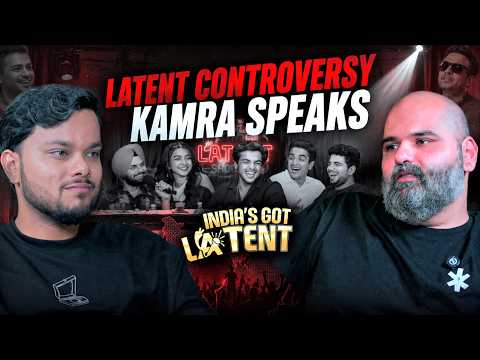
There is a particular kind of conversation that you only get to have once with a person. The kind where they stop performing, drop the well-rehearsed lines, and tell you what they actually think about the world they live in.
I had that conversation with Kunal Kamra recently on Accompany Akki.
We started, as these things usually do, with the news cycle of the moment. Samay Raina. Ranveer Allahbadia. The Latent controversy. The legal cases. The standup sets that referenced the legal cases. The tweets that referenced the standup sets that referenced the legal cases. A recursive nightmare of attention economy fuelled by outrage and processed into content.
But Kunal was not interested in adjudicating who was right or wrong in any of these episodes. He had a bigger point to make.
“Media is going out of their way to not do journalism,” he said. “That is what they want. Were Ranveer Allahbadia right or wrong? Was Samay Raina right or wrong? Was Kunal Kamra right or wrong? And what are we basically? We are the oil. We are the oil for their car. When they need to drive their car, they will fill this oil and drive it. They will drive it with or without our permission.”
I have been thinking about this metaphor for days now.
The Oil Economy
The Indian media ecosystem, as Kunal sees it, is not a system that informs the public. It is a system that requires fuel to function. The fuel is outrage. The outrage is generated by taking comedians, creators, public figures, and selectively amplifying their most provocative moments until those moments become national debates.
The comedians don’t choose to be in the cycle. The cycle chooses them. And once chosen, they have no exit ramp. They can apologise. They can stay silent. They can fight back. None of it matters to the machine. The machine just needs the next tank of fuel.
Kunal gave a specific example. He said, suppose tomorrow there is an election verdict and he tweets, “This mandate is against constitutional democracy.” That’s it. One sentence. An opinion.
What happens next is predictable. The news channels run his tweet on loop. Anchors scream. Panellists are assembled. The question that gets debated for forty-eight hours is not whether the mandate is or isn’t constitutionally problematic. The question that gets debated is whether Kunal Kamra had the right to say what he said.
The substance dies. The personality becomes the story. The machine gets its fuel.
“Sensationalize tho hota hai,” I said, agreeing.
“Sensationalize tho hai,” he replied.
The Misogyny Problem
This is where the conversation took a turn that I was not expecting.
Kunal pivoted from media criticism to comedy criticism. And he was just as unsparing about his own industry.
“When satire is not an option, misogyny is all that comedy can bring to the table,” he said.
He elaborated. In an environment where political satire invites legal trouble, where social satire invites mob anger, where any kind of pointed humour can become a court case, comedians retreat to the one form of humour that still has plausible deniability.
Jokes about women. Jokes about gender roles. Jokes that confirm existing prejudices rather than challenging them.
“Ninety-five percent of comedy is misogyny,” he said. And then he clarified. “Conforming to gender rules, gender identities. It is a form of misogyny. The whole circle runs on this premise. Substandard comedy. Misogyny.”
I tried to push back. I asked if this wasn’t too sweeping a generalisation. He held his ground. He pointed out that the comedians who do try to do real satire are constantly under attack. The ones who do not are celebrated, given Netflix specials, hosted by Kapil Sharma.
The Kapil Sharma Show
I asked Kunal about the new Kapil Sharma show that Samay Raina has been on. He did not hold back.
“Kapil Sharma pe apna time waste nahi karna chahta,” he said.
He said the only Kapil Sharma joke he has ever genuinely found funny is one specific bit. The rest of it, he said, is built for “masi” audiences. The aunties. The clean comedy crowd.
But then he made the point that has stayed with me.
“Clean kahaan hai?”
Where is the cleanliness, he asked, if the comedy depends entirely on gendered tropes, on women being the punchline, on conformity to old hierarchies? Linguistic cleanliness is not moral cleanliness. A joke without a curse word can still be deeply regressive.
What We Used To Watch
Kunal then made a comparison that surprised me.
“Pehle hota tha yaar Hera Pheri aur sab. Jab hum movie dekhte the toh actually it used to be funny.”
Hera Pheri. Udaan. Films where the humour came from character and situation. Films where Baburao Apte was funny because of who he was, not because of who he was punching down at. Films that, even at their most commercial, had a craft to them.
Compare that, he said, to what dominates Indian comedy now. Loud. Transactional. Built on stereotypes. Designed for reels.
Even in films with comedic tracks, like the politician bit in Dhurandhar, the comedy works because it has context, character, and consequence. It is not a series of disconnected punchlines designed to get a clip viral.
The Question I’m Left With
I do not agree with everything Kunal said. I think the “95%” is rhetorical exaggeration. I think there are Indian comedians doing genuinely interesting work that does not depend on misogyny.
But I also think his core point is correct. The conditions under which Indian comedy operates today are hostile to satire. And when satire is impossible, comedians find other targets. And those other targets are almost always whoever has the least power to fight back.
That includes women. That includes gender minorities. That includes the people who do not have a Netflix special to defend themselves with.
If we want better comedy, we have to ask why we are not getting it. The answer is not that comedians are uncreative. The answer is that the system around them rewards the safest joke and punishes the riskiest one.
The same system, by the way, that turns every controversy into fuel.
The same system that runs on our oil.
This is the part where I usually try to land on something hopeful. I am not going to do that today. Some conversations do not have neat endings. They just leave you with questions you cannot stop asking.
Full Episode:
More from the blog

Subscribe to our newsletter
The best new roles, resources and must-watch episodes — in your inbox every week. No spam, unsubscribe anytime.