
Nikunj Jain on Why He Bets on Founders, Not Industries
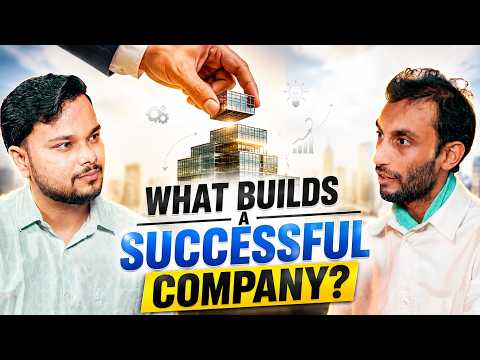
Why Nikunj Jain Bets on Founders, Not Industries Elon Musk has said that building a company is going through excruciating amounts of pain for an elongated duration of time.
Jensen Huang said nearly the same thing, at a point when Nvidia's valuation was somewhere between 1 and 2 trillion dollars.
Two of the most successful builders alive, describing the process in almost identical terms, at the peak of their success.
For Nikunj Jain, that overlap is the whole point.
If people who have won at the highest level still describe the process as prolonged suffering, the suffering is not a sign something has gone wrong.
It is simply what building looks like, for everyone. Betting on people, not sectors This shapes how Nikunj approaches who to back.
He bets on founders, not industries, and he is upfront about why.
He is not a VC, and does not claim to read macro trends or sector shifts the way people who spend entire careers on that do.
What he believes he can judge, at least to some degree, is people: specifically, founders willing to put in 80 to 100 hours a week for years, including the genuinely bad stretches.
He separates what he calls professional founders from those building out of something closer to love for the problem itself.
Both can succeed, but the ones who survive the worst years tend to be the second kind.
What actually sustains a founder through the pain The more useful question is what keeps someone going through years of that kind of pressure.
Nikunj is clear it is not greed. Chasing money, fame, or status can drive a founder for a while, but that fuel tends to erode faster than people expect once the initial excitement fades and the grind sets in.
What lasts longer is passion, specifically the passion to solve a real problem and add value to someone else's life.
Passion behaves differently under pressure than greed does. It tends to erode much more slowly, sometimes barely at all, which is why founders who are genuinely attached to the problem tend to outlast those chasing only the outcome.
Money as a barometer, not a goal Nikunj extends this into a wider point about why anyone builds anything worthwhile.
Everything we use today was designed, built, or invented by someone trying to add value to a system that already existed.
Building is an act of contribution. In that framing, money is not the goal, it is a barometer.
It measures how much value someone has added to other people's lives, and the wealth a person accumulates is simply an accounting of that value.
It is a byproduct that shows up after the value is created, not the reason to start in the first place.
The takeaway If the only thing keeping you going while building something is the size of the eventual outcome, that fuel may not survive the years of pain that both Musk and Huang describe.
If instead you are building because you cannot stop thinking about a problem and the people it affects, that is a more durable kind of energy.
Discomfort is not a phase to get through, it is closer to a permanent condition for anyone doing something genuinely new.
What determines how long you last inside that discomfort is not the industry you picked, it is the kind of energy you brought into it in the first place.
Full conversation-
More from the blog



Subscribe to our newsletter
The best new roles, resources and must-watch episodes — in your inbox every week. No spam, unsubscribe anytime.