
They Called MARCOS Commando "Disabled" Every Single Day
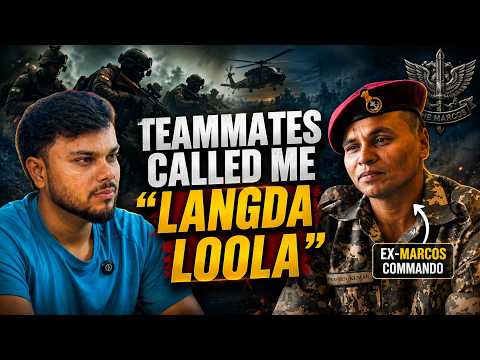
There is a segment in our podcast with Praveen Kumar Teotia that should be uncomfortable reading for anyone who has ever thanked a soldier for their service.
Only the Tata Group stood with me.
The Shaurya Chakra recipient, former MARCOS commando, and author of “26/11 Braveheart” was telling us how a private conglomerate funded his 26/11 recovery when the Indian state did not.
Four years of recovery. Seven operations until 2014. The complete reconstruction of an ear destroyed by a terrorist bullet. Thigh skin. Head tissue. Rib cartilage. Rebuilt piece by piece.
For all of this, the Indian government provided nothing. The military provided nothing.
The Recovery Timeline
Four years of recovery. Seven operations that continued until 2014. The recovery arc did not end with the initial hospitalization. It continued for six years total.
The bulk of the operations were reconstructive.
The Reconstruction Reality
The interviewer asked how the reconstruction was done.
Skin from the thighs. Tissue from the head. Cartilage from the ribs.
The reconstruction was multi-source. Skin from one part of the body. Tissue from another. Cartilage from a third. Designed, cut, and assembled to rebuild an ear that had been vaporised by a bullet.
The Turning Point
The medical journey turned into a financial crisis.
The infections were reaching a point where they could enter the skull and reach the brain.
“Mere paas ek hi tareeka hai to main apna fund nikaal ke apna ilaaj karaun. Aath-das laakh rupaye. Ya phir aap meri madad kar do.”
Eight to ten lakh rupees. Pull his own funds or find someone who could help.
Running to offices. Making rounds. Reaching the point where he said: forgive me, I made a mistake even trying.
The Tata Meeting
He approached the Tata Group. The interviewer asked whether it was Ratan Tata.
He had met Ratan Tata. Their conversation had been a normal one. The person he approached about funding was the Vice Chairman.
Governments and militaries are asleep here. It does not seem they have any concern for soldiers.
The Vice Chairman funded the entire reconstruction.
The Government Silence
The government takes from you. It taxes you.
This is Teotia’s stated testimony. The Indian state does not provide medical support for reconstruction surgeries needed as a result of injuries sustained during counter-terror operations. It also does not exempt the wounded soldier from income tax.
The MARCOS Unit Treatment
The interviewer asked what support came from the MARCOS unit.
The abuses that came were beautiful.
You are the main culprit who stopped the glory.
The man who held the chamber hall for 30 minutes with his ear destroyed, who took four bullets, who was declared dead on live television, was blamed by his own institution for stopping the operation’s glory.
Every morning, at roll call, being called langda-loola. Crippled.
The Langda-Loola Reality
He walked with his hands hanging. For two years, his arms could not bear weight.
He was the only langda-loola at the roll call. The only crippled fallout in the unit.
If you are told every morning that you are crippled, where does your confidence go?
The Pain Philosophy
What makes this segment extraordinary is what Teotia did with the pain.
There is always pain in his single functioning lung. There is not a moment without it.
Pain is my pleasure. Pain is my progress. Pain is what has remained.
Pain is my best friend. No friend can be better.
The pain always stays. Whenever someone says trust this, the pain says: no, wait, there is hurt here. The pain tells him what happened.
The pain is his memory. The pain is his teacher. The pain is his warning system.
The Universal Lesson
There is a general lesson here about pain that applies far beyond military service.
Chronic pain is the psychological challenge that separates people who continue functioning from people who withdraw. Most professionals who develop chronic conditions in mid-career - back injuries, migraines, joint problems - experience a slow erosion of confidence and capacity. The pain becomes evidence of decline. The decline becomes the identity.
Teotia’s reframe is the opposite. The pain is not evidence of decline. It is evidence of survival. The pain is not a limit. It is a companion. The pain does not diminish him. It informs him.
This is a psychological capability, not a natural response. It requires the deliberate choice to reframe suffering as information rather than evidence of failure. Most people cannot make that choice on their own. Teotia did.
The Institutional Failure
The other general lesson is institutional.
The Indian state has done well by 26/11 in symbolic terms. The anniversary is marked. The martyrs are honored. The films are made. The memorial exists. The public rituals of remembrance are performed.
What Teotia’s account reveals is that the symbolic remembrance does not translate into practical support for the wounded soldiers who survived. The medical costs of counter-terror injuries are not covered. The income tax exemptions do not apply. The professional support systems break down.
The Tata Group filled the gap for Teotia. But the Tata Group is not a national medical support system for wounded soldiers. It is a private conglomerate that helped one specific individual. Every other wounded soldier who does not find a Tata equivalent is on their own.
This is the systemic issue that Teotia’s story reveals. Not the specific individuals who failed him. The system that leaves wounded soldiers to find their own private funding for their own medical needs.
The Question India Needs To Answer
Teotia is a Shaurya Chakra recipient. India’s third-highest gallantry award. The state has already recognised his valour with one of its highest honours.
What the state has not done is match the recognition with practical support. The medical costs of the injuries that earned him the Shaurya Chakra were not covered by the state that awarded it.
This is the mismatch that anyone concerned about how India treats its wounded heroes should sit with.
Watch the full episode here:
More from the blog

Subscribe to our newsletter
The best new roles, resources and must-watch episodes — in your inbox every week. No spam, unsubscribe anytime.