Your go-to guide for career, growth, and mentorship. Real insights from founders, Leaders, Industry Experts & CXOs to land dream jobs and win big.
Ask ten people in India to define the difference between a startup and a business, and you will likely get ten different answers.
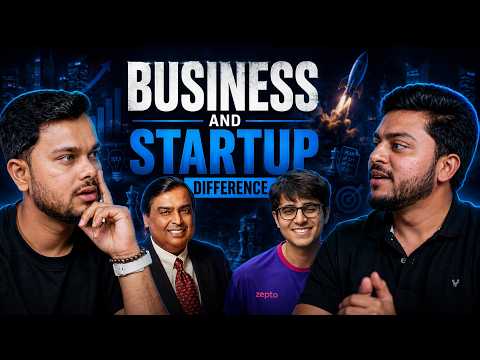
Nipun Jain's explanation offers a framework that is both simple and genuinely useful.
The word "startup" only entered India's common business vocabulary around 15 years ago, during the Flipkart era.
Before that, everyone simply called their venture a business.
Nipun's core observation: most startups are technically businesses, but not every business qualifies as a startup.
His definition of a business is broad: anything where a transaction is happening, revenue is generated, and people work to realize that revenue.
This applies to everything from a local shop to a manufacturing unit.
A startup, by contrast, is defined by three markers:
Technology as a core enabler of scale, the intent to seek outside funding like VC investment, and the ambition to serve markets beyond a single geography.
A venture built in Delhi but designed to serve Bangalore or Mumbai too, backed by innovation, qualifies as a startup.
There is also a structural dimension. Ventures owned entirely by a small founding team with no external equity holders remain businesses, regardless of size.
The moment a venture is registered as a private limited company seeking VC funding and built for scale, it becomes a startup.
The best new roles, resources and must-watch episodes — in your inbox every week. No spam, unsubscribe anytime.