
He Arrested His Own Government's Leader - Anil Swarup
There is a particular kind of professional respect that survives political transitions. It is rare. It is earned. It is the result of integrity that has been tested under specific conditions and held.
Anil Swarup spent 38 years in the Indian Administrative Service. Across that span, he served as the special secretary to Kalyan Singh of the BJP. He was deeply trusted by Mulayam Singh Yadav of the Samajwadi Party. Manmohan Singh of the Congress-led UPA placed him in the Cabinet Secretariat. Narendra Modi of the BJP-led NDA made him Coal Secretary.
Four prime ministers and chief ministers across the full spectrum of Indian political ideology. They all came to trust him for the same reason.
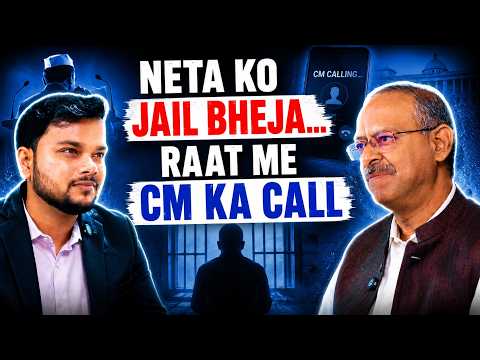
The story he told us on our podcast, about the night Mulayam Singh Yadav called, is the cleanest illustration of how that trust was earned.
The Setting
The Ram Janmabhoomi tensions were at their peak. Most districts in Uttar Pradesh were under curfew. Anil Swarup’s district was not.
“Curfew had been imposed in other districts. In my district, there was no curfew, because everyone knew that I had been posted in Hardoi before this, and I had filed an NSA case against an MLA from the ruling party. My reputation had reached the district. People knew this one will not let anyone off, no matter what.”
This is the precondition for what came next. The reputation had already been built. It was not “tough officer.” It was “tough officer who will move against ruling party people if the situation requires it.”
The communal tension was contained because everyone, on every side, understood that nothing they did would be subject to selective enforcement. The peace was a product of the credibility.
The Murder And The Procession
The trigger was a murder.
“There was a murder. The district president of the ruling party announced he would take out a funeral procession.”
A funeral procession in a communally charged atmosphere has a specific meaning. It is a political demonstration designed to mobilise emotion. In the wrong conditions, it becomes the inciting incident for the riot that everyone has been working to prevent.
Anil Swarup understood this immediately. He called the district president in to discuss.
“I tried to persuade him. I said, brother, your government is in power, why are you doing this? But he insisted. He said, no sir, we will take it out.”
The reasoning he offered did not work. The district president had his own political calculation.
When persuasion failed, Anil Swarup acted.
“When he would not listen, I locked him up. CrPC 107/16. I put him in detention.”
The Midnight Call
The phone call came that night.
“Mulayam Singh ji called me. He said, you have detained our president. I said, yes sir, I have.”
This is the moment in the story that determines everything that follows. A young officer, recently posted, has just arrested the district president of the party in power in the state. The Chief Minister of that state is on the phone, late at night, asking why.
Anil Swarup did what most officers cannot do in this moment. He explained calmly and stood his ground.
“Why?, he asked. I explained what was happening. He said, no, no, find a way to release him. I said, sir, your government is in power. Your reputation is strong. Everything is peaceful. If they take out this procession, there will be a riot. They will not be able to control it, and your reputation will suffer.”
This is the part that should be taught in every public administration course. The young officer did not say “I have done my duty.” He did not invoke the law. He did not claim moral authority. He framed the issue in terms of the Chief Minister’s own interest.
The framing is significant. Anil Swarup was not telling Mulayam Singh what was right. He was telling him what would protect his political reputation. The two happened to align in this case. The framing made it possible for the Chief Minister to act on the bureaucrat’s judgment without losing face.
The Resolution
Mulayam Singh did not agree on the phone. But he did not insist either.
“I said, sir, you talk to him. Or have someone from Lucknow talk to him, that taking out a funeral procession is not appropriate. He hung up. I did not know what had happened. I assumed my transfer would come the next day.”
The not-knowing is part of the credibility of the story. Anil Swarup is not telling us a story in which he was always confident he would prevail. He is telling us a story in which he did the right thing knowing it might cost him his posting.
“The next morning, someone called, not him, someone else, to say that the president had agreed to not take out the procession. So I released him. I had no personal enmity.”
The professional point is the absence of personal enmity. Anil Swarup arrested the district president because the procession would have caused a riot. He released him because the procession would no longer happen.
The Award
The closing detail is what makes this story memorable.
“Three months later, the same Chief Minister who was so angry with me gave me one of the best District Magistrate awards.”
A Chief Minister angry enough to call a young officer at midnight, three months later, gave him a public award.
This is not the standard Indian political story. The standard story is grudge, transfer, marginalisation. The Mulayam Singh story is the opposite. The Chief Minister recognised, after the dust settled, that the officer had been correct. The peace in the district had held. The award was the acknowledgment.
Anil Swarup’s own framing was modest. “He had realised it was the right decision. The district remained peaceful. That is probably why he honoured me.”
The Cross-Party Career
The next part of the segment was the most striking.
“Mulayam Singh ji respected me a lot. Even though I had been the special secretary to Kalyan Singh ji. I had been Kalyan Singh ji’s direct information. Yet Mulayam Singh ji still respected me. Maybe my honesty affected him. I do not know. He would have to tell you why.”
“In the central government, the UPA was in power. Manmohan Singh ji put me in the Cabinet Secretariat. Then the new government came. Modi ji made me Coal Secretary.”
This is the full arc. Special secretary to a BJP Chief Minister. Trusted by an SP Chief Minister who arrested him out of fury and honoured him in months. Placed in the Cabinet Secretariat by a Congress Prime Minister. Made Coal Secretary by a BJP Prime Minister.
Four leaders. Four parties. Four ideologies. One officer.
The Personal Evolution
The closing reflection of the segment was the part that should land hardest for any young professional.
“I had some misconceptions about politicians in the beginning. I used to think the problems of society were because of politicians. So whenever a politician came to meet me, I came with bias. I would fight with them. I had many fights with politicians in the beginning.”
This is the honest admission that most senior civil servants do not make. Anil Swarup was, in his own telling, a confrontational young officer who saw politicians as the source of all problems.
“Slowly, I began to understand. What am I gaining from this? Why am I not listening to him? My experience with Kalyan Singh ji changed me. I found that politicians can be very good people too. So my idea that every politician is bad was not appropriate. And even bad politicians have many good qualities.”
The shift is moral and operational at the same time. Anil Swarup did not abandon his integrity. He found a more effective way to deploy it. The instinct to fight was replaced by the instinct to persuade.
“I changed my thinking. I cannot change the politician. Then slowly I found a way to get work done from the same politician. How to present my point so that if he disagrees with me, he can come to agree. Without fighting. Earlier I used to fight.”
This is the most useful career advice for anyone in any institution. You cannot change the people in power. You can change how you present your case to them. The young version of any professional fights. The mature version persuades. The integrity is the same. The deployment of it changes.
The Universal Lesson
The reason this segment matters beyond Indian bureaucratic history is that the principle is universal.
If you work for a difficult boss, the same principle applies. You cannot change them. You can change how you frame your case.
If you have to convince a stakeholder who has different incentives, the same principle applies. You can argue from your moral position, or you can argue from theirs.
If you are negotiating with a counterparty who has more power, the same principle applies. You cannot force them. You can frame the issue so that their own self-interest leads them where you wanted them to go.
This is not manipulation. It is mature professional communication. The Anil Swarup who arrested the district president was right. The Anil Swarup who told Mulayam Singh “your reputation will suffer” was effective.
What I Took Away
Three things from this segment will stay with me.
The framing principle. Telling power what protects power, rather than what is morally correct, is the most effective way to move power in the direction you want. This is true in politics. It is true in business. It is true in every institution.
The cross-party career. Four governments. Four ideologies. One officer. The fact that this is possible in India today is itself a useful corrective to the narrative that everyone in public service has been politically compromised.
The personal evolution. The shift from fighting politicians to persuading them is the move that distinguishes effective civil servants from frustrated ones. Both can have integrity. Only one can deliver outcomes.
Watch the full episode here:
More from the blog



Subscribe to our newsletter
The best new roles, resources and must-watch episodes — in your inbox every week. No spam, unsubscribe anytime.