
The Stronger the Government, the Weaker the People: Kunal Kamra on Democracy, Power, and Political Fear in India
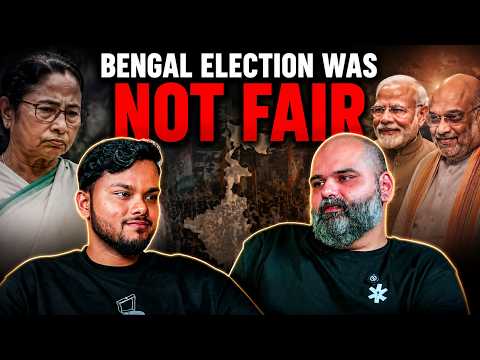
A decisive leader. A clear mandate. A government that knows what it wants and has the power to pursue it without endless negotiation, compromise, or the friction of coalition politics. In uncertain times, the appeal of concentrated authority is real and understandable. It promises efficiency. It promises direction. It promises that someone, somewhere, is actually in charge.
In a recent conversation, Kunal Kamra offered a direct challenge to that intuition.
"The stronger the government, the weaker the people."
It is a single sentence, but it opens into a much larger argument about what democratic health actually requires, what gets lost when power concentrates too completely in one place, and whether India's current political moment is producing strength or producing the conditions that make genuine accountability progressively harder to sustain.
1. Democracy Is Not Just Counting Votes
The conversation begins with a question that is genuinely uncomfortable for anyone invested in the legitimacy of Indian electoral democracy.
Are modern Indian elections truly free and fair?
Kamra does not offer a simple answer, and the conversation is more interesting for it. He acknowledges BJP's electoral victories as real. He is not arguing that votes were fabricated or that results were manufactured from nothing. The critique operates at a different level.
His argument is that democratic fairness cannot be reduced to the mechanics of voting alone. It encompasses everything that happens before a single ballot is cast: how public opinion is shaped, how the media covers competing parties, how institutional resources are deployed during campaign periods, how opposition parties can operate in an environment where the asymmetry of power is enormous.
When one party controls the machinery of government, the resources of the state, and, by Kamra's account, the dominant narratives of television media simultaneously, the playing field is not level even if the counting is honest. Democratic legitimacy depends not just on the accuracy of the result but on the conditions that produced the choices voters were making.
This is a contestable argument, and many people will contest it. But it is a serious democratic argument, not simply a sore-loser narrative, and it deserves to be engaged on its merits.
2. What 2024 Changed
One of the more analytically interesting observations in the conversation concerns how the 2024 Lok Sabha results shifted the psychology of opposition politics.
Before 2024, EVM legitimacy was a constant theme in opposition discourse. Electronic voting machines, their reliability, their susceptibility to manipulation, the opacity of their design, generated sustained suspicion across multiple opposition parties and election cycles. The argument was loud, persistent, and had significant traction among opposition supporters.
After 2024, something changed. The results were closer to opposition expectations than the previous two general elections. BJP returned to power but with a reduced majority, dependent on coalition partners for the first time in a decade. And the intensity of the EVM debate, at least among mainstream opposition parties, visibly decreased.
Kamra's observation is that this shift is revealing. If the EVM concern was genuinely about the integrity of the counting mechanism, it should not diminish when results happen to align more closely with what opposition parties hoped for. The fact that it did suggests the debate was always partly about the results rather than purely about the mechanism. That is a more honest account of how political grievance and institutional criticism interact than most participants in Indian political discourse are willing to offer about their own side.
3. The Democratic Case for Coalition Governments
The part of the conversation that will be most interesting to people who think seriously about political institutions is the extended argument for coalition governments as a democratic feature rather than a bug.
The conventional view treats coalition politics as a necessary evil. Messy. Slow. Prone to lowest-common-denominator policymaking. The horse-trading of alliance politics is usually described in the language of compromise as corruption, as the retreat from principle in pursuit of survival.
Kamra's argument inverts this completely. Coalition governments, in his framing, are healthier for democracy precisely because they force negotiation. A party that governs with a comfortable absolute majority can do more or less what it wants. Its internal dissidents have limited leverage. Its coalition partners do not exist. The constraints on its behaviour are primarily electoral, and electoral consequences are distant enough that a confident government can absorb significant public frustration between cycles.
A coalition government faces a different reality. Every policy choice must be filtered through the preferences of alliance partners who have their own electorates, their own priorities, and their own willingness to withdraw support if pushed too far. Regional parties bring geographic interests into national decision-making. Smaller partners create friction that slows the translation of political ambition into executive action.
From an efficiency standpoint, this looks like weakness. From a democratic standpoint, Kamra argues, it looks like accountability. The government that must negotiate its way through every significant decision is one that is constantly being forced to reckon with interests beyond its own. That is not a failure of democratic governance. It is democratic governance working as intended.
4. The Silence Inside Powerful Parties
One of the most quietly devastating observations in the conversation is about what happens to individual political voices inside highly centralised political organisations.
Kamra asks a question that applies to several major Indian political parties but lands most pointedly on the currently dominant one: why do senior leaders within powerful parties almost never speak independently? Why is the range of public positions expressed by members of a party with hundreds of MPs effectively identical to the positions of the party's central leadership?
The answer he offers is structural rather than personal. It is not that these are people without independent views or the courage to express them. It is that the cost of expressing those views inside a highly centralised political organisation is genuinely high. Position, relevance, future opportunity, these depend on demonstrated loyalty. Public dissent, even mild and constructive disagreement, creates risk that most political careers cannot absorb.
The result is a form of enforced uniformity that looks like consensus but is actually something closer to silence. And that silence has consequences for democratic health. A legislature full of people who cannot publicly disagree with their own party leadership is not really functioning as a legislature. It is functioning as an extension of the executive, which is precisely the condition democratic systems are designed to prevent.
5. Media Is Not Free or Fair Either
The conversation's critique of political power cannot be separated from its critique of media, and Kamra makes the connection explicit.
"Media is not free or fair either."
The argument here extends the accountability gap identified in other episodes of this kind of political analysis. Independent media is supposed to function as a check on political power, providing citizens with information that allows them to evaluate their government's performance against their own interests. That function depends on media organisations being genuinely independent of the political power they are supposed to scrutinise.
Kamra's claim is that significant portions of Indian television media have lost that independence, not necessarily through direct control but through the alignment of economic interests, access incentives, and ideological sympathy with dominant political power. When the channels that reach the largest audiences are also the channels most aligned with the government's preferred narratives, the informational environment in which citizens make democratic decisions is compromised.
This matters for the electoral fairness question raised earlier. Even if votes are counted perfectly, elections are processes of opinion formation as much as vote counting. If the informational inputs into that opinion formation are systematically skewed, the output, the vote, reflects that skew. Democratic legitimacy becomes more complicated than the official result suggests.
6. Fear as a Governing Principle
Running through the entire conversation, beneath the specific arguments about elections and coalitions and media, is a recurring theme that Kamra returns to repeatedly.
Fear.
Not fear among ordinary citizens alone, though that is part of it. Fear inside the political ecosystem itself. Leaders who fear losing relevance and therefore do not speak. Politicians who fear exclusion from coalition calculations and therefore stay silent on uncomfortable questions. Institutions that fear confrontation with power and therefore avoid the cases and questions that most need examination. Media organisations that fear losing access and therefore moderate their coverage accordingly.
This is a specific kind of democratic decay. It does not require anyone to issue direct threats or explicit instructions. It operates through the rational calculation of people who understand what the current environment rewards and what it punishes. The result is a gradual contraction of the space in which independent thought, independent action, and independent speech can operate without consequence.
Kamra's point is that this contraction is not visible in any single dramatic moment. It accumulates slowly, through many small adjustments and self-censorships, until the cumulative effect is a political environment significantly more constrained than it was before, without any single identifiable moment at which the constraint was imposed.
7. Stability Versus Accountability
The conversation arrives, finally, at a philosophical question that democratic theory has wrestled with across centuries.
Should democracy prioritise stability or accountability?
Concentrated power delivers stability, or at least the appearance of it. Decisions are made faster. Implementation faces fewer internal obstacles. The government can pursue long-term objectives without constant interruption from coalition partners or internal dissenters. For voters who are tired of governmental dysfunction and want someone to actually get things done, this is a genuinely attractive offer.
Coalition politics and institutional independence deliver accountability, but often at the cost of efficiency. Negotiation is slow. Compromise produces policies that satisfy no one completely. The friction of multiple stakeholders can feel like paralysis rather than balance.
Kamra's position is clear: he will take the accountability. His argument is that stability built on concentrated power is inherently fragile, because it depends on the continued good judgment and good intentions of those holding the power, rather than on systems that would constrain bad judgment or bad intentions when they appear. And systems, unlike individuals, do not retire, do not get tired, and do not need to be trusted.
The One Thing
Democratic strength has never come from the strength of governments. It has come from the strength of the systems that limit what governments can do without consequence. The most important question for any democracy is not whether its current leader is trustworthy. It is whether its institutions would survive a leader who is not. By that measure, the health of Indian democracy depends less on who wins the next election than on whether the mechanisms of accountability, independent media, institutional courage, and political pluralism, are stronger or weaker than they were before.
Watch the full conversation here:
More from the blog

Subscribe to our newsletter
The best new roles, resources and must-watch episodes — in your inbox every week. No spam, unsubscribe anytime.