
26/11 Mumbai Attack: Kasab, Taj Hotel & The Untold MARCOS Story | Praveen Teotia
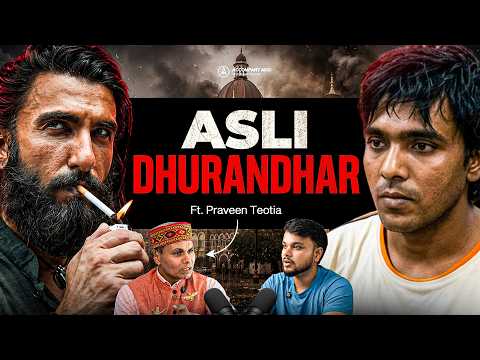
What the only MARCOS commando who fought face-to-face in the 26/11 attacks taught me about courage, betrayal, and the cost of surviving when your country forgets your name
A conversation with Praveen Kumar Teotia, Ex-MARCOS, Shaurya Chakra Gallantry awardee, and 26/11 Warrior.
At 7:45 PM on the night of November 26, 2008, Praveen Kumar Teotia was eating vada pav at Leopold Café in Colaba.
He did not know he was sitting at ground zero of what would become the worst terrorist attack in Indian history. He finished his food, drank sugarcane juice, walked to the Navy harbor gate, caught the 8:00 PM boat back to his unit in Karanja island, and went to sleep on the rooftop. He had train reservations. He was going home on holiday in two days.
By midnight, those same streets outside Leopold Café were running with blood.
By morning, Praveen Kumar Teotia had a bullet through his lung, his ear destroyed by gunfire, a defective grenade in a room with two trained Pakistani special forces operatives, and 150 lives depending on a 23-year-old fighting alone in complete darkness.
This is the story most Indians have never been told.
Part 1: Who Actually Went First
Every Indian who watched 26/11 unfold on television remembers the same thing: NSG is coming, NSG is arriving, NSG is here.
The NSG arrived on the morning of November 27. By then, hours of chaos had already passed.
What most people do not know is that the first forces on the ground at Taj and Trident were MARCOS commandos, the Navy’s special operations unit, who arrived on an informal phone call, with no official paperwork, no letter from the PMO, and no formal authorization.
Maharashtra’s then-Home Minister RR Patil called the Navy. He asked if MARCOS could help. They said yes. Two teams deployed immediately: one to Taj, one to Trident.
“There was no official request. We went on one phone call. PMO se koi letter nahi aaya. Koi permission nahi thi. Because when the country needs you, you don’t wait for paperwork.”
When the operation was over and the cameras were rolling, Praveen said, nobody asked who they were or what they had done. The work was finished. So was the recognition.
Part 2: The Equipment That Should Have Got Them Killed
When Praveen reached the armoury before deployment, what he found was a failure of institutional preparation that still angers him today.
The helmets available could not stop a bullet. The body armour issued could only stop a 9mm round fired from 50 meters away. At closer range, it would be penetrated. AK-47 rounds, which is what the terrorists were carrying, would tear through it entirely.
He took what was available because stopping was not an option. An AK-47 with five magazines. One hand grenade. One stun grenade. A helmet that looked the part but served none of it.
They expected a helicopter to the Taj Hotel. It would have taken five minutes.
The helicopter did not come.
They went by tug, the kind of vessel that pulls larger ships, a slow lumbering boat across the harbor. Forty-five minutes to reach the Taj. Forty-five minutes during which people inside were dying.
“Tab tak log mar rahe the wahan pe. The entire film was playing live. People watched human beings die in real time. Dead bodies. Real blood. What they show in Bollywood is nothing compared to what happened that night.”
Part 3: The Room Full of India’s Elite
Inside the Taj, Praveen’s second team joined the first team already operational. Rooms were being cleared. Evacuation was underway. Blood was everywhere.
Then intelligence emerged about a chamber hall on the upper floors: roughly 100 to 150 high-profile guests were hiding there. Gautam Adani and his business partner. Four Members of Parliament. Multiple Bollywood celebrities. German senators. Americans. Africans. Guests from three weddings that had been taking place in the hotel that night.
The General Manager of the Taj, Karambir Singh Kang, was in the lobby weeping. His phone was not connecting. His wife and two sons were on the sixth floor.
They had been burned alive in their room.
The terrorists had locked doors and set fire to them rather than waste ammunition. Praveen did not know this yet. He gently stopped Kang from walking into the unsecured wing and told him his team would go.
He led that rescue himself. Floor by floor. Knocking on doors. Showing identification cards through gaps. Guiding people down stairwells. Getting them out.
But the terrorists had been told exactly where to go next.
Part 4: When the Media Sold the Country for TRP
A Member of Parliament inside the chamber made a phone call while hiding.
That call went live on television.
The handlers in Karachi who were directing the terrorists in real time were watching Indian news channels. They saw the broadcast. They now knew exactly where the country’s most powerful people were sheltering.
“Unhone location disclose ki. TRP ke liye unhone desh bech diya. Media wale bade chalaak hain. Unhe desh se koi matlab nahi hai.”
The directive went to the terrorists immediately: take them hostage. With Gautam Adani, four MPs, foreign dignitaries and Bollywood figures as hostages, the handlers in Pakistan could have dictated terms to the Indian government from a position of complete leverage.
“Agar hamari team ek minute late ho jaati toh ye desh us din ghutno par tha. Literally.”
Praveen’s team reached the chamber in time. The hostage situation never materialized. But it came within the margin of one minute.
Part 5: Alone in the Dark
The rescue operation from the chamber brought Praveen to an adjoining dining hall. He entered first, as the lead. He had walked approximately ten steps inside when he heard two AK-47s fire from the right side of the room.
He dropped. The bullet caught his ear. Blood began flowing immediately.
When he turned to find his buddy, the room behind him was empty.
The team had fallen back the moment they heard the safety catches switch. No tap on his shoulder. No fallback signal. No communication. His team commander, a decorated NDA graduate with a sword of honor from his passing-out parade, had left without him.
“Buddy ka niyam toda usne. Lekin unko to gallantry mili uske liye.”
Praveen was alone in complete darkness with two trained Pakistani special forces operatives, one destroyed ear, inadequate body armour, and an AK-47 with five magazines.
He thought of his farm back home. How he had cut sugarcane alone. How he had irrigated fields alone at night. How he had always known how to operate alone because he had always had to.
“Muscle memory thi meri. Apne gaon ke kaam ne mujhe bachaya us raat.”
Part 6: The Grenade That Did Not Explode
For the next 25 to 30 minutes, Praveen exchanged gunfire with two terrorists in pitch darkness, neither side able to get a clear angle, both firing around cover. He fired single shots to vary his position signature. They returned bursts.
His blood continued to flow from his ear.
He knew he could not last. He made a decision.
He pulled out his hand grenade. He withdrew the pin. He threw it.
He counted to ten.
The grenade did not explode.
“Aaj tak us grenade ki jaanch nahi hui. Pin nikal gayi. Sab kuch sahi tha. Grenade nahi fata. Dhoka ho gaya ek sainik ke saath. Apne hi desh ke logon ne dhoka diya.”
To this day, no official investigation has been conducted into why that grenade failed. No inquiry. No accountability. Nothing.
Then his own team threw tear gas into the room to flush out the terrorists. It landed on Praveen. His eyes filled with water. His coughing gave away his position.
At that moment, he stood up.
“Main aise nahi marna chahta. Dam ghut ke nahi marunga. Maar ke marunga. Main khada ho gaya.”
He fired at the area where the terrorists were. He turned toward the door and ran. Three or four bullets from a burst of AK-47 fire caught him. One went through his chest and out the other side, passing through his lung. One entered a magazine on his belt. One ricocheted off and struck near his heart. One tore through his collar strap.
The momentum of his body carried him to the doorway. He collapsed there.
Part 7: What Recovery Actually Looked Like
Ambulance. Five kilometers. Aashvini Military Hospital.
He was declared dead by media channels before he arrived.
His lung had been destroyed. His ear was gone. He could not breathe. He could not lift his arm. He could not open his eyes. He lay there hearing everything around him, able only to finally say his name and the words: main mar raha hoon.
From there: four years of recovery. Seven surgeries. Reconstruction of his ear using cartilage removed from his ribcage and skin grafted from his thigh. Operations continued until 2014.
Throughout this period, he received daily abuse from colleagues. He was called langda, loola, cripple. He was told: you are the main culprit who stopped the glory.
No official support came. The only organization that helped him was the Tata Group. When infections spread so badly that they threatened to reach his skull and his brain, and he had exhausted every official channel, he went to the Tata Vice Chairman and placed his case honestly. They funded every subsequent surgery in full.
“Tata group mera sab kuch hai. Agar woh nahi hote toh main nahi hota.”
Part 8: What He Has Done Since
Praveen Kumar Teotia is today India’s first and only gallantry awardee to have become an advocate. He holds a law degree. He runs marathons. He runs them with one functional lung, chronic pain that has never left his body since November 26, 2008, and an ankle fractured two and a half years ago when a car hit him and drove away.
At the 2025 Mumbai Marathon, one of the toughest full marathons in the country due to its elevation, he ran it in three hours and twenty-three minutes. On one lung. With permanent pain.
“Pain mera dost hai. Sabse acha dost. Hamesha saath rehta hai. Kabhi chhodta nahi.”
He is also fighting a different kind of battle now: demanding accountability for the MARCOS contribution to 26/11, for the grenade that never detonated, for the CCTV footage from the Taj that has never been made public, and for the honest accounting of who did what that night and how Major Unnikrishnan died and why his body lay in a room for eight to nine hours before anyone recovered it.
“Agar us waqt ka CCTV footage public ho jaaye toh jo log aaj hero bante phir rahe hain unka sach pata chal jaayega. Aur jo sachchi dastanein hain woh bhi saamne aayengi.”
The One Thing
If there is one thing that stays with you from everything Praveen Kumar Teotia said, it is this:
On the night of November 26, 2008, India was one minute away from having its most powerful citizens taken hostage by terrorists receiving real-time intelligence from Pakistani handlers watching Indian news channels broadcast their location live.
The country was saved by a 23-year-old from a farming family who had learned to work alone in sugarcane fields, who went into a dark room with inadequate equipment, was abandoned by his team, lost his ear to a bullet, pulled a grenade that did not explode, was shot through the lung, and still made it to the doorway.
He was never properly recognized. He was abused during his recovery. His grenade was never investigated. The CCTV footage was never released.
He is now a lawyer and a marathon runner with one lung and permanent pain who calls that pain his best friend because it has never once left his side.
Some debts a country carries that it does not even acknowledge. This is one of them.
Watch the full conversation on YouTube:
More from the blog
Subscribe to our newsletter
The best new roles, resources and must-watch episodes — in your inbox every week. No spam, unsubscribe anytime.