
Indians Must Start Raising Their Voice!
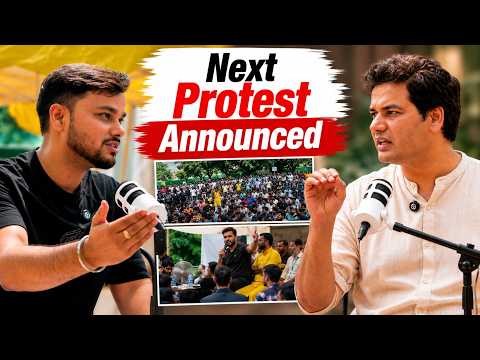
People say my vote will be wasted if I vote for the honest candidate, Vijeta said. Brother, you wasted your vote when you voted for the corrupt person. He is not going to give you a separate medal. You made your own vote worthless.
The CJP spokesperson was doing something specific with this observation. Indian voters routinely rationalize voting for candidates they know are compromised on grounds that voting for an honest candidate would be “throwing away” their vote.
The Expanding Movement Vision
The conversation opened with Vijeta’s specific framing.
The main thing is that we bring democratic spirit into people, Vijeta said. Farmer not getting MSP. Tribals lying on funeral pyres over land rights. Chain snatching. Crime. Everyone has different issues. They have to raise them.
The specific example she gave is worth pausing on.
In school we used to be made to write - write a letter to the SHO telling him about crime, Vijeta said. We did it for school exams. We never actually do it in real life. But we should.
The observation captures a specific gap between civic education and civic practice.
The Civic Ignorance Point
Vijeta made the specific observation.
People do not know their MLA’s name, Vijeta said. Do not know their MP’s name. Do not know who represents them at the councilor or sarpanch level. There is no interest.
The specific claim is analytically important. Democratic accountability requires citizens who know who represents them.
Bring interest to your own life, Vijeta said. Because if you do not, whoever is doing whatever they are doing will keep doing it.
The Local Politician Accountability Gap
Vijeta then made the specific institutional observation.
At least people like us can ask some questions about the Prime Minister, Vijeta said. But MLA, MP, even sarpanch or councilor - their blind ledger just keeps running.
The specific observation is worth extracting. National politics receives disproportionate media attention. Local politics receives far less.
You try to talk about them and reporters face huge risk, Vijeta said. Mukesh - his body was found in a septic tank. Rajiv Pratap’s case where he showed hospital irregularities - he was also killed.
The specific references matter. The reference to Mukesh matches Mukesh Chandrakar, a Chhattisgarh journalist whose body was found in a septic tank in early 2025 after he reported on alleged local corruption.
This cannot continue, Vijeta said. If everyone speaks, they cannot put everyone in jail. That is real democracy.
The Elvish Yadav Comparison
The interviewer noted that people are busy.
Vijeta’s response was pointed.
You say people are busy, Vijeta said. But look at Elvish Yadav’s vlogs where nonsense is happening - crores of views. So people do have time. For what you think is important, you make time.
The Ease Of Doing Business For The Poor
Vijeta then made the specific policy observation.
Government talks about ease of doing business, Vijeta said. When will there be ease of doing business for the poor person? For the big businessmen you roll out the red carpet. A poor person setting up a vegetable stall - you drive a bulldozer over it.
She then gave the specific examples.
A video came out, Vijeta said. A woman who is physically disabled. She is not begging. She is working. She is selling matkas. And they broke her matkas.
The specific example is worth pausing on. A disabled woman refusing to beg and instead selling pottery is precisely the entrepreneurial spirit that Indian development policy claims to celebrate.
There was a panipuri seller in Gurgaon, Vijeta said. Some man there calls himself Singham Singham. What kind of Singham are you? This poor person - imagine how he cut his stomach to build that stall. And you broke it.
Everything becomes encroachment, encroachment, Vijeta said. Someone born on this soil - does he not have the right to set up a stall and earn something?
The Intellectual Revolution Appeal
Vijeta then extended the framework.
India severely needs an intellectual revolution, Vijeta said, a spiritual revolution. Those people have to come into politics too.
Clean the garbage from your mind first, Vijeta said. Then clean yourself. Then clean your surroundings. India will automatically clean up. Once society becomes good, politics will become good automatically.
The framework is philosophically distinctive. Society determines politics, not the other way around.
The Vijay Thalapathy Inspiration
Vijeta gave a specific contemporary example.
Look at Vijay Thalapathy, Vijeta said. What is he inspiring? In one and a quarter months, look at what he has done.
The reference is to the Tamil superstar who launched Tamilaga Vettri Kazhagam.
The Wasted Vote Myth Debunk
Then came the segment’s most quotable moment.
People vote and say I will not vote for this person, Vijeta said. My vote will be wasted. He seems honest but my vote will be wasted.
Vijeta’s inversion:
You will vote for a corrupt person, Vijeta said. He wins. Is he going to give you a separate medal? The honest person who stood up - if he gets even 10,000 votes, he thinks I lost but I got 10,000 votes. I will fight again next time.
Prashant Kishor ji fought and lost, Vijeta said. How will his courage build for the next time? He worked so hard, planned. He did not win.
There is no logic to my vote will be wasted, Vijeta said. Brother, you made your vote worthless when you voted for the corrupt person.
What This Reveals
Three things from this segment will stay with me.
The wasted vote inversion. The specific logical reframe is analytically clean and politically useful.
The local accountability gap. The specific observation that Indian democracy has more scrutiny at the top than at the local levels is worth taking seriously.
The ease of doing business inversion. The specific critique that policy rhetoric about entrepreneurship does not extend to actual poor entrepreneurs is worth applying to specific policy debates.
The Universal Insight
The Vijeta framework applies beyond India.
Every democracy has some version of the strategic voting problem. Voters trained to think about winning candidates rather than deserving candidates produce specific political equilibria that reward compromise.
Every large city has some version of the informal economy problem.
Every media environment has some version of the accountability inversion.
The Local Democracy Test
Vijeta’s specific claim about local politician accountability deserves extension.
Indian democracy has three tiers. National. State. Local. The specific attention allocated to each is inverted from what democratic theory would suggest.
National politics gets disproportionate media coverage. Every major national political event is analyzed exhaustively. Every prime ministerial statement is decoded.
State politics gets less coverage. State elections are analyzed but state governance receives episodic attention.
Local politics gets almost no coverage. Municipal decisions, sarpanch actions, councilor choices - these affect citizens’ daily lives most directly but receive the least scrutiny.
The specific implication is that the most important accountability work is at the level with the least public engagement. Citizens who genuinely want to improve their political environment should invest in local political knowledge - who their MLA is, what their record shows, what their opponents are proposing.
The Personal Practice For Readers
Vijeta’s framework has specific implications for readers.
If you cannot name your MLA, that is your first work. Find out. Read their public record. Understand their positions.
If you do not vote in local elections, that is your second work. National elections get all the attention. Local elections determine who runs your immediate environment.
If you find your local candidate options unappealing, apply the Vijeta test. Is the honest candidate really unelectable, or have you assumed they are? Even 10,000 votes for an honest candidate builds pressure for future cycles.
If you consume large amounts of entertainment content, ask whether the ratio of civic to entertainment content in your consumption reflects the priorities you would consciously endorse.
The Real Question For Readers
The uncomfortable question the segment raises is whether you know your MLA’s name.
For most Indian readers, the honest answer is no.
Vijeta is asking whether readers know enough about their local political environment to hold their local representatives accountable.
Watch the full episode here:
More from the blog

Subscribe to our newsletter
The best new roles, resources and must-watch episodes — in your inbox every week. No spam, unsubscribe anytime.