
What Happens When You Stop Caring About Politics?
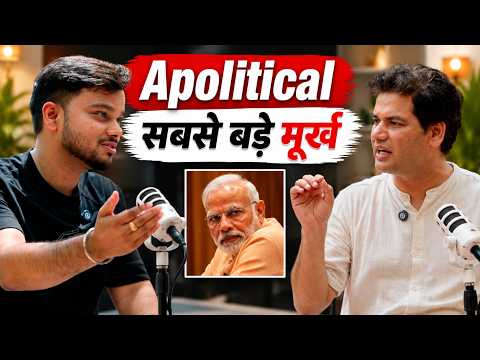
Civilization is civilization when there is humanity, Vijeta said, when there is compassion. Not just because you have military strength - that is already there. How you enter people’s hearts is what matters.
The CJP spokesperson was distinguishing between what she calls sabhyata (civilization) and what is often mistaken for it. Military strength, economic size, and administrative capacity are components of a state. But they do not constitute civilization on their own.
The Civilization Test
The specific framing is worth pausing on. Civilization requires the specific ethical practice of humanity and compassion in the exercise of power.
The distinction has ancient philosophical roots in Indian thought and appears across most classical traditions worldwide. The specific test is not what you can do to people. It is what you choose to do to people.
The Historical Rulers Framework
Vijeta then extended the framework to historical analysis.
Rulers who worked through force alone, Vijeta said, none of them lasted in memory as great. Even Aurangzeb - even Muslim historians won’t glorify him because of what he did. His own people don’t praise him.
The specific historical claim is worth understanding as philosophy rather than partisan reference. Aurangzeb, who ruled the Mughal Empire from 1658 to 1707, is remembered in Indian history as a ruler whose reign was marked by significant use of force.
Vijeta’s point is not primarily about Aurangzeb specifically. It is about the general pattern.
Look at why Akbar is remembered with such faithfulness, Vijeta said, because he was devoted to India, more devoted.
The specific contrast is important. Akbar, who ruled from 1556 to 1605, is remembered across most Indian historical traditions as a ruler whose approach emphasized inclusion, cultural synthesis, and administrative diplomacy.
The philosophical point Vijeta is making is that rulers are remembered for the specific ethical choices they made, not for the raw power they wielded. Legacy is downstream of humanity, not force.
The Comment Section Testimony
Vijeta then shared a specific personal experience.
People come in the comments saying take medicine, Vijeta said, get treatment for your mind. That is what they write. But if you actually met me - you would never say these things. If you sat with me and heard what I am saying, it would all sound perfect.
The specific observation captures a documented online abuse pattern. Anonymous commenters, particularly targeting women who speak publicly on political issues, frequently deploy the specific dismissive tactic of suggesting mental illness.
Vijeta’s response is worth extracting. She is pointing out the specific asymmetry that anonymous online engagement produces. In person, the same commenters would likely engage differently.
If you met me, Vijeta said, you would understand.
The Universal All-Our-Own Appeal
Vijeta then articulated her broader framing.
Farmer is ours, Vijeta said. Soldier is ours. We are ours. The poor are ours. That is the truth.
The specific list is worth pausing on. Each category is part of a single national community. Their welfare should not be pitted against each other.
Fear-based governance won’t create anything lasting, Vijeta said.
The specific extension is the political theory point. Governance that relies on fear as its primary tool produces short-term compliance but long-term instability.
The Tax Framing
Vijeta then made the specific economic point.
The poor also pays tax, Vijeta said. Through GST, when he buys something, he pays. The rich also pays tax. Then everyone deserves justice equally.
The specific observation about GST is worth understanding. India’s Goods and Services Tax is a consumption tax applied to most economic transactions. Because consumption represents a larger share of income for poor households than for wealthy ones, GST is what economists call regressive.
The specific implication is that the traditional framing of “poor people don’t pay tax” is factually inaccurate.
Has anyone properly tried for justice, Vijeta said. That is the question.
The Elegant Reframe
Then came the segment’s most quotable moment.
If the government did its job properly, Vijeta said, if the problems were being solved properly, if there was justice - then why would this movement even exist? It exists because the work is not being done.
The specific logical structure is worth extracting. Civic movements do not arise spontaneously. They arise in response to specific failures.
The specific implication is that attacking movements as illegitimate misses the point. Movements are symptoms.
The World Opportunity Vision
Vijeta then closed with the constructive framing.
There are so many opportunities in the world now, Vijeta said. New industries, new kinds of work. Everyone should try at their own level.
The specific point is worth understanding. Some people will run for office. Some will fund independent journalism. Some will start businesses. Some will teach. Some will simply refuse to be numb.
What This Reveals
Three things from this segment will stay with me.
The civilization test. The specific distinction between military power and civilizational maturity is worth internalizing.
The historical legacy framework. The specific observation that rulers are remembered for their ethical choices, not their power, is analytically useful.
The elegant reframe. The specific logical structure - if governance functioned, movements would be unnecessary - is politically valuable.
The Universal Insight
The Vijeta framework applies beyond India.
Every democracy is facing some version of the civilization test. Can governance be exercised with humanity? Or does it default to force?
Every state faces the specific historical question. How will your specific era be remembered?
Every political movement is diagnostic of governance failure.
The Cross-Traditional Test
The specific civilization test Vijeta is invoking has parallels across classical traditions worldwide.
In classical Chinese philosophy, the specific concept of the Mandate of Heaven captures a similar idea. Rulers who exercised power with virtue retained legitimacy. Rulers who ruled with cruelty lost it.
In classical Greek philosophy, the specific distinction between tyranny and legitimate rule captured the same test. Both had power. Only one had legitimacy.
In classical Islamic political thought, the specific distinction between just and unjust rulers appears across most traditions of jurisprudence.
Vijeta’s framework is not unique to India. It is a specific expression of an insight that has appeared across most human civilizations. The universality suggests the specific insight is durable.
The Personal Application
The Vijeta framework has specific implications for readers.
If you exercise power in any capacity - as an employer, a parent, a teacher, a manager - the civilization test applies. What is your practice of humanity in the specific power you hold?
If you evaluate leaders in your professional or civic life, the civilization test provides a specific criterion. Not what they can achieve. What they choose to do with what they can achieve.
If you are considering your own legacy, the specific framework suggests the criterion. Not what you accumulated. What you chose to do with your specific position.
The specific practice is not complex. It requires the willingness to ask, at moments of significant decision, whether humanity is being exercised or whether power alone is being deployed.
The Historical Precedent
The specific Akbar reference deserves its own extension.
Akbar’s reputation across Indian historical traditions is durable. His specific administrative choices, cultural inclusions, and diplomatic approaches shaped what came after him for centuries.
The specific contrast with rulers who used more coercive approaches is that Akbar’s decisions produced legacy while their decisions produced dissolution.
Vijeta’s implicit argument is that current governance choices will be subject to the same historical test. What is being built today will be remembered in specific ways. The ethical texture of the choices will determine how the specific era is characterized.
For those exercising power today, the specific implication is that current decisions have future evaluators. History is watching.
The Real Question For Readers
The uncomfortable question the segment raises is whether you can name the specific area where you have applied the civilization test recently.
For most readers, the honest answer is no.
Vijeta is asking readers to internalize the test as a personal practice.
Watch the full episode here:
More from the blog

Subscribe to our newsletter
The best new roles, resources and must-watch episodes — in your inbox every week. No spam, unsubscribe anytime.