
Why Mainstream Media Is Losing People's Trust?
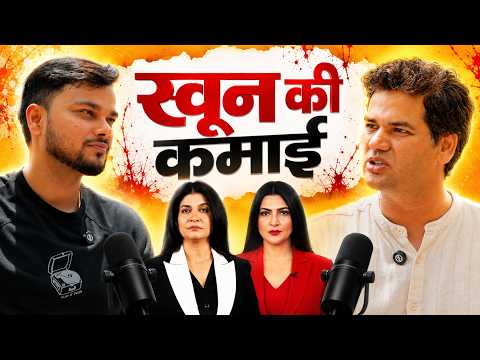
Earlier, a fool knew he was a fool, Vijeta said. He would ask an educated person - you tell me the answer. There was basic sense in people. Now they read WhatsApp forwards and form opinions from them. They don’t have the thinking capacity to know it could be false. They don’t know fact-checking exists. Every fool now thinks - what do you know? I know this.
The CJP spokesperson was diagnosing something that most Indians recognize but few articulate this clearly. The information environment has changed in a way that has produced confident wrongness at scale.
The Victory Of Breaking Silence
The conversation began with the movement Vijeta represents.
The biggest victory is that we broke the silence where there was silence before, Vijeta said. That is the biggest win. Now it’s on the government to bring their own victory - to come back to the right path and rebuild public trust.
The specific framing is worth pausing on. Vijeta is not claiming policy victory. She is claiming a discourse victory.
The Movement’s Trigger
The interviewer asked what specifically sparked the movement.
It started with the CJI’s insensitive remark, Vijeta said. That got a reaction - why are you talking about the country’s youth this way? At the same time, the NEET paper leak happened. Paper leaks keep happening. So this issue got taken up specifically.
The combination created the flashpoint. Vijeta extended the framing beyond NEET.
Any citizen of the country, whoever they are, whatever their issue - why should they suffer? Any movement that says we’re listening, we’re watching, we’re speaking is a good thing.
The Political Smear Response
The interviewer asked how the movement responded to being labeled as extremists.
They call our movement B team of terrorists, virus, and so on, Vijeta said. If you think the youth of your country are terrorists, then who is really spreading fear? You are the one spreading fear.
Vijeta is inverting the accusation. When authorities label civic protesters as extremists, the accusation itself becomes a form of intimidation.
The Manipur Coverage Silence
The interviewer noted that mainstream media had not covered the movement well.
Vijeta extended the critique.
Look at what’s on TV, Vijeta said. Snacks, food shows, entertainment. Meanwhile Manipur is also an Indian state. Violence has continued there. Mainstream TV didn’t even cover it. When we say jai hind, does Manipur count?
The Manipur reference is specific. The state has faced sustained ethnic violence over the last two years. Mainstream Indian TV news coverage has been widely criticized as inadequate.
The Corporate Media Structural Problem
The interviewer asked about the constraints on mainstream anchors.
Vijeta acknowledged the structural issue.
I understand the constraints, Vijeta said. Corporate ownership limits what anchors can cover. Anchors are puppets in that system. Nothing is in their hands. But I say - kick that job. How do you sleep at night when you see how millions of people’s problems are being ignored?
The framing puts responsibility partly on individual journalists working within compromised structures.
The Media Decentralization Thesis
The interviewer asked what the solution looks like.
Vijeta’s answer was the segment’s most constructive claim.
The solution is people like you, Vijeta said. Media has to be decentralized. YouTube journalists are already doing this.
The specific vision is worth quoting.
I want that in every constituency in the country, Vijeta said, an independent YouTuber should stand up who covers your area’s problems. People will listen because they have interest. The more raw and unbiased, the better.
The constituency-level media proposal is worth understanding. India has over 500 parliamentary constituencies. If each had an independent journalist producing regular coverage of local issues, the accountability infrastructure would fundamentally change.
The Support Challenge
Vijeta then named the specific problem with the current independent media economy.
Independent journalists in India are running behind money because they need to support their families, Vijeta said. This is legitimate. But the model works only if people support them. People write ‘full support’ in comments but don’t actually support financially.
The clarifying claim:
If someone is raising your voice, you should support that person, Vijeta said. Otherwise the corporate media control continues.
The framing captures the actual economics of independent journalism. Only citizen-funded models can sustain journalism critical of both corporate and government interests.
The WhatsApp Overconfidence Problem
Then came the segment’s most original observation.
India is also very opinionated, Vijeta said. Either one side or the other side. They are not willing to listen to each other. Propaganda is so strong.
Vijeta then made the specific comparison that lands the argument.
Earlier, a fool knew he was a fool, Vijeta said. He would say - listen brother, you are educated, you tell me this. There was basic sense in people. Now what has happened? They read something on WhatsApp. They form opinions from that.
The specific problem is worth extracting.
Not enough brain to think these could be lies, Vijeta said. That fact-checking exists. That thinking has not developed. So every fool now thinks - what do you know? I know this.
The observation is diagnostically sharp. Traditional social hierarchies of knowledge - where people knew who to ask about what - have collapsed. In their place is a democratized information environment where everyone has instant access to information and confident opinions on all topics.
The result is confident wrongness at scale.
What This Reveals
Three things from this segment will stay with me.
The decentralized media thesis. Vijeta’s proposal for constituency-level independent journalism is specific and actionable.
The financial support gap. Comments saying “full support” do not fund journalism. The gap between civic sympathy and actual financial support is the specific bottleneck for Indian independent media.
The WhatsApp overconfidence insight. Modern information environments have inverted the old dynamic where a fool knew he was a fool.
The Universal Insight
The Vijeta framework applies beyond India.
Every democracy is currently facing the same three problems. Centralized media that fails to cover important stories. Independent alternatives that lack sustainable funding. Citizens who consume unlimited unreliable information without corresponding skills to evaluate it.
The Practical Implications
Vijeta’s framework has specific implications for readers.
If you follow an independent journalist regularly and their work has informed your views, actively support them financially. Membership subscriptions, one-time contributions, Patreon-style ongoing support - any of these are more useful than comments.
If your local area lacks independent journalism, consider whether you could be the one to start it. YouTube, Substack, and podcast tools are all cheap. Distribution follows content.
If you consume news through WhatsApp forwards, adopt a personal fact-checking practice. Before sharing anything, spend 30 seconds checking whether the claim is verified. Break the propaganda transmission chain at your own device.
If you rely on mainstream television for news, diversify. Read at least three sources for any important story. Include at least one independent source.
The Personal Practice
The Vijeta observation about confident wrongness applies to every reader.
Every one of us has topics where we are the fool who does not know he is a fool. The correction requires humility. Ask yourself regularly what you have strong opinions about that you have not actually researched. Ask what your evidence base is. Ask whether your evidence would survive scrutiny.
The specific meta-skill of source evaluation is what separates confident correctness from confident wrongness. It takes practice.
The Real Question For Readers
The uncomfortable question the segment raises is what specifically you support with your attention and money.
If you rely on mainstream corporate media for your news, you are trusting that structure to serve you well. Vijeta’s argument is that this trust has been misplaced.
If you follow independent journalists but do not financially support any of them, you are relying on their labor without contributing to sustaining it.
Watch the full episode here:
More from the blog

Subscribe to our newsletter
The best new roles, resources and must-watch episodes — in your inbox every week. No spam, unsubscribe anytime.