
50 Crore Recover Karne Ke Liye Sabse Corrupt Officer Ko Chuna! - Anil Swarup
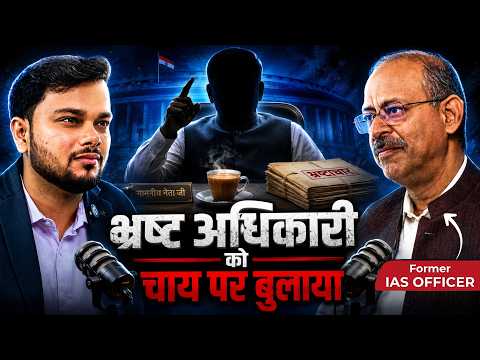
“I called the most corrupt officer in my organisation for tea. I said: boss, there is nothing left in this institution to take. What will you suck dry?”
The 38-year IAS veteran was telling the story of how he turned the worst officer in his organisation into the best one, using nothing but public recognition. The setup involves one of the most creative public-sector financial restructurings of modern Indian bureaucracy. The payoff involves a tea meeting and a sentence that changed a man’s life.
The PICUP Assignment
The setting was PICUP, the UP State Financial Corporation, where Anil Swarup was sent as MD with the mandate to wind it up. The institution had been losing money for seven years.
“Main pahuncha wahan par to aisa laga jaise graveyard mein ja rahe hain. Sabko pata tha main unki naukri lene aaya hoon, band kar doonga.”
This is the atmosphere most institutional turnaround leaders encounter. The team has given up. The leadership has given up. The mandate is closure.
Then Anil Swarup had an idea.
The Reverse Financial Engineering
The PICUP business model was straightforward. The institution borrowed money from SIDBI at interest. It lent that money to industries. When industries went sick, PICUP did a “one-time settlement” with them. Interest was waived. Only the principal was recovered.
The structural problem was that PICUP was still paying interest on its own borrowings to SIDBI. The asset side was being written down. The liability side was not.
Anil Swarup’s idea was to flip the model. Force the debtors to pay some interest, not just principal. Then convince the creditor to waive its interest.
The Pitch To SIDBI
The conversation with the SIDBI MD was sharp.
“Hum aapko 250 crore dene hain. Isme se 80 crore rupaye to mool hai aur 170 crore interest hai. To agar main 80 crore de doon, aap 170 crore maaf kar denge.”
The SIDBI MD pushed back. They could not do that for public sector. Anil Swarup had done his homework.
“Aapne 15 private sector companies ke to kar diye.”
The MD did not expect that. The conversation shifted. Anil Swarup played the leverage card.
“Aapne shayad mere baare mein research nahi ki. Main IAS mein aane se pehle police mein tha. Mere do batchmate Assistant Deputy Director hain CBI mein. Main soch raha hoon ek chitthi likh doon unko.”
The hint was clear. The investigation would not be about wrongdoing. It would be about inconsistency. Why did SIDBI waive interest for 15 private sector companies but refuse the same treatment for a public sector institution?
The next morning, SIDBI agreed.
The 50 Crore Recovery Gap
The deal solved the SIDBI problem. It did not solve the cash problem. PICUP had no money. The government gave Anil Swarup 30 crore. He needed to recover 50 crore from the debtor side to close the deal.
This is where the story turns from financial engineering to people management.
The Tea Meeting
“Maine apni sansthan ka jo sabse bhrasht adhikari tha usko chai pe bulaya.”
He called the single most corrupt officer in his organisation for tea.
“Boss aisa hai ki aapne suna main isko recover karna chahta hoon. Yaar ab sansthan mein to bacha nahi hai kuch. Tum choosoge kya?”
Boss, there is nothing left in the institution. What will you suck dry?
The response was predictable. No corrupt officer will admit they are corrupt.
“Wo sir kaisi baat kar rahe hain?”
Anil Swarup knew this.
“Beeti taahi bisaar de. Tumne jo kiya so kiya. Ab tum meri sahayata karo. Sansthan theek ho jaayegi. Uske baad jo chaho tum karna.”
Let what is past be past. Now help me. After the institution is saved, do what you want.
This is the move most managers refuse to make. They want the confession before the cooperation. Anil Swarup offered the cooperation without the confession.
The Long Discussion
“Kaafi lambi charcha hui. Uske baad wo lag gaya usme aur humne kaafi hadd tak paisa recover kar liya.”
A long conversation. Then the officer joined the recovery effort. Substantial money was recovered.
“Yeh sansthan saat saal ke baad pehli baar profit mein aayi.”
Seven years of losses. First profit. The turnaround was real.
The Transfer
The institutional turnaround had the predictable consequence in Indian bureaucracy. The posting became attractive. Another officer wanted it. Anil Swarup was moved.
“Mujhe koi aapatti nahi thi.”
He did not protest. He moved on. The institution was saved.
But he kept tabs on the corrupt officer.
The Follow-Up
The reports from PICUP were striking.
“Log mujhse kehte the ki sir wo to bilkul parivartit ho gaya. Wo to bilkul imaandari se sab kaam kar raha hai.”
The officer had completely transformed. Working with integrity. Putting in real effort.
Anil Swarup called him home for tea.
“Yaar tumhara hriday parivartan kaise hua?”
Friend, how did your heart transformation happen?
The Answer That Changed Everything
“Bole sir jab aap 300 logon ke saamne meri peeth thapthapa ke kehte the ki is sansthan mein jo sudhar ho raha hai, iski vajah se ho raha hai, sir meri chhati chaudi ho jaati thi. Aur jo kick mujhe us samay milti thi wo pehle kabhi nahi mili.”
Sir, when you patted my back in front of 300 people and said the institution’s improvement was because of him, sir, my chest would swell. And the kick I got at that moment, I had never gotten before.
This is the management insight that no corporate training programme teaches well.
The corrupt officer had been getting money. He had been getting the small thrill of cheating the system. He had never been getting public recognition for legitimate work. The recognition was a hit he had never tasted.
Once he tasted it, the money was no longer the same. The recognition was qualitatively better than the bribes. The bribes had to be hidden. The recognition was given in front of 300 people. The bribes confirmed his worst version of himself. The recognition confirmed his best version.
The Failure Acknowledgment
The closing of the segment was the part that gave the story credibility.
“To usme main succeed kar gaya aur jagah fail hua. Kitaab meri agar Ethical Dilemmas padhi, usme kai failures hain mere. To yeh jeevan hai.”
I succeeded here and failed elsewhere. If you read my book Ethical Dilemmas, there are many failures of mine in it. This is life.
This is the integrity that makes the rest of the story believable. Anil Swarup is not selling a universal management technique. He is sharing what worked in one specific case, while acknowledging that the same approach failed elsewhere.
The Universal Lesson
The principles in this segment apply far beyond Indian bureaucracy.
For corporate leaders managing teams with people who are not performing, the same recognition principle applies. The first instinct is often to manage them out. The second-best instinct is to confront them directly about their behaviour. Anil Swarup’s third option is to find their underlying capability and reward it publicly, before they have even fully committed to the new behaviour.
For founders managing early employees who have been operating in dysfunctional patterns, the same “beeti taahi bisaar de” frame is useful. The willingness to draw a line under past behaviour, without requiring confession, is what allows the employee to step into the new role without losing face.
For institutional builders generally, the asymmetry between recognition and punishment is worth internalising. Punishment can stop bad behaviour. Recognition can produce good behaviour. The two are not symmetric.
The Negotiation Lesson
The SIDBI deal is also worth studying as a negotiation case.
The standard public sector negotiation framework would have been to accept the institutional debt and wind up. Anil Swarup found a creative restructuring path that solved both the asset side and the liability side simultaneously.
The hardball move was the CBI batchmate hint. The leverage was not threat of investigation. The leverage was threat of inconsistency. SIDBI had set a precedent with 15 private sector companies. The threat was to make the inconsistency public.
This is the cleanest negotiation tactic when you are negotiating against an institution that has already conceded the principle you are arguing for. You do not have to argue the principle. You just have to invoke the precedent.
What I Took Away
Three things from this segment will stay with me.
The reverse financial engineering. Most institutional turnarounds in India try to recover assets without addressing the structural liability side. Anil Swarup attacked both sides simultaneously.
The “beeti taahi bisaar de” frame. The willingness to offer cooperation without requiring confession is the most overlooked move in difficult-people management.
The recognition principle. The kick of legitimate public recognition is qualitatively different from the kick of money. Once an employee tastes the legitimate version, the illegitimate version loses its appeal.
You may agree with Anil Swarup. You may push back. The PICUP turnaround happened. The corrupt officer was transformed. The 170 crore was waived. The story is real.
Watch the full episode here:
More from the blog


Subscribe to our newsletter
The best new roles, resources and must-watch episodes — in your inbox every week. No spam, unsubscribe anytime.