
Real Difference Between a Startup & an Enterprise - Razorpay Insider
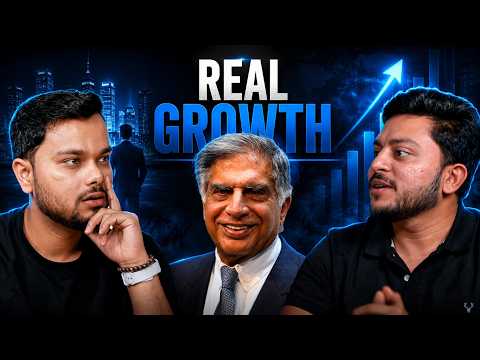
I don’t think any Indian startup has reached the point where I can stop calling them a startup, Nipun said.
The Senior Director at Razorpay Rize and former leader at Pickrr (acquired by Shiprocket for $200 million) was answering a direct question about the startup-to-enterprise transition. His honest opening was that the question is not yet ready for India.
The 20-Year Answer
Nipun’s first observation was about the timing of the question itself.
This question will be more relevant 20 years from now, he said.
The reasoning was structural. India’s most successful startups are only 15-17 years old. Flipkart. Zomato. Swiggy. All still relatively young. None of them has yet reached the stage where the startup label becomes inappropriate.
This is a strong claim from someone who has spent his career in the Indian startup ecosystem. It suggests that the entire conversation about startup-to-enterprise transition is still theoretical in India. We do not yet have companies that have graduated out of startup mode in the way that IBM, Microsoft, or GE have graduated in the US.
The Categorization Confusion
The confusion runs deep even inside Nipun’s own office.
We keep having this conversation, Nipun said. Who should we call a startup? An idea-stage company gets called a startup. A company that just raised 10 lakhs in a grant is a startup. A company that raised its first million dollars is a startup. Swiggy is a startup. Zomato is a startup. Flipkart is a startup.
The umbrella term covers everything. This is a specific commercial problem. When companies define their ideal customer profile as “startups,” the definition includes companies at wildly different stages, sizes, and needs. Selling to a Rs 10 lakh grant recipient and selling to Swiggy are completely different exercises. But both fall under the same category label.
Nipun’s team addresses this internally by creating sub-categories.
There are so many categories within startups, he said. Mid-market. Enterprise. Super enterprise. But the umbrella term is startup.
The confusion is not a mistake in language. It is a reflection of the fact that India’s startup ecosystem is still too young to have produced clear graduation criteria.
The Growth Test
Nipun then offers his own working test.
I call any company a startup as long as you are saying “I have to grow 15-20% every year,” he said. That is only possible in a startup.
The 15-20% annual growth rate is the specific number Nipun uses. Companies that need to grow at that rate to justify their positioning are startups. Companies whose growth has naturally moderated to lower single digits are enterprises.
The lifecycle framework he references is the standard one.
Every company goes through phases. Start. Growth. Super growth. Flat. Decline.
The startup is in the first three phases. The enterprise is in the flat phase. Decline is where enterprises eventually go if they do not reinvent themselves.
For me, enterprise is when your growth almost gets flat, Nipun said. When I say flat, I do not mean you do not grow at all. But 5-7% growth is a good growth. It will be single digit.
The flat growth signal is important. It does not mean the company has failed. It means the company has achieved market position that is no longer being chased at breakneck speed. Growth continues but at sustainable single-digit rates that reflect market saturation rather than expansion into new markets.
The Startup Investment Paradox
The economics of the startup phase are worth understanding as background.
The challenge with startup is that you invest heavily in people and resources during peak years, Nipun said. When you expect that you will spend more and earn less. But that’s okay because year 11, 12, 13 - you will get it back.
This is the startup investment paradox. The heavy investment years are the money-losing years. The founders and investors accept multi-year losses because the model expects recovery in years 11 through 13.
Nipun gave a specific example.
We have the Zomato example, he said. Zomato made multi-year losses. But now that they have set themselves up as a company, almost like an enterprise, they are about to reach there. They have started earning back all the investments.
Zomato is the current case study. Multi-year losses through the growth phase. Now approaching the enterprise stage where the earlier investments are being recovered.
Every Indian startup is theoretically on this same path. Most of them are still in the loss-making growth phase. A few are approaching the enterprise stage. None have fully crossed over.
The Four Enterprises
Then Nipun named specific companies.
The four Indian companies Nipun would today call enterprises: MakeMyTrip. Naukri. BookMyShow. Zerodha.
The reasoning for each was similar.
MakeMyTrip. Naukri. These are companies that started during the dotcom era at its peak, he said. Now they are running stable, successful companies. They are enterprises. You cannot call them startups anymore.
MakeMyTrip was founded in 2000. Naukri was founded in 1997. Both have been operating for over two decades. Both have stable market positions. Both have moved beyond the exponential growth chase.
BookMyShow. Zerodha.
BookMyShow was founded in 1999. Zerodha was founded in 2010. Both have dominant positions in their categories. Both are profitable. Both are no longer chasing exponential growth.
You have acquired a space, Nipun said. Now very few chances exist that anyone will displace you.
That is the market-position test. When your competitive moat is deep enough that displacement is unlikely, you have become an enterprise. This is a stronger test than growth-rate alone. It is the test of durability.
The Definitional Framework
Nipun’s summary framework has three conditions for still being a startup.
First: your business goals have not been achieved yet.
Second: you have not found perfect product-market fit or positioning.
Third: super abnormal growth is important for your survival.
If all three apply, you are a startup regardless of your age, funding stage, or headcount. If none apply, you have moved into enterprise territory regardless of what label you use.
The Signal
Nipun ended with a specific signal for when the transition has happened.
When your people, your stakeholders, your users realize that okay, I am no longer dealing with a startup, I am dealing with a more structured company or an enterprise.
The signal is external. It is not about how the founder defines the company. It is about how the ecosystem defines the company.
When employees start seeing the company as an established employer rather than a risky bet. When investors treat it as a stable holding rather than a growth story. When customers treat it as a durable partner rather than a temporary vendor. That is when the startup has become an enterprise.
The Universal Insight
The Nipun framework applies beyond India.
Every scaling company faces the same lifecycle. Every founder eventually has to decide whether they are still chasing exponential growth or whether they have moved into the stable enterprise phase. The decision affects everything - hiring, investment strategy, product roadmap, customer messaging, capital structure.
Most companies get this transition wrong in one of two directions.
Some companies continue calling themselves startups long after they have become enterprises. This limits their ability to attract enterprise talent, enterprise customers, and enterprise capital. The startup label carries risk associations that established enterprises do not want.
Other companies rebrand themselves as enterprises before they have actually made the transition. This limits their ability to justify continued investment in growth, continued burn on customer acquisition, and continued equity dilution. The enterprise label carries stability associations that startups have not yet earned.
Nipun’s framework helps with getting this right. The tests are specific. Business goals achieved. Product-market fit found. Growth rate stabilized. Market position secured. When all four are true, you have graduated. When any of the four is still uncertain, you are still a startup.
The India-Specific Implication
The most interesting implication of Nipun’s framework is for the Indian ecosystem specifically.
If MakeMyTrip, Naukri, BookMyShow, and Zerodha are the only companies that have made the transition, then India’s tech industry is still overwhelmingly in the startup phase. Even Swiggy, Zomato, and Flipkart - the household names of Indian consumer tech - are still startups by Nipun’s definition.
This is not a criticism. It is a structural observation. It means the Indian ecosystem still has room for expansion. Most of the growth story is ahead. The companies that will eventually be India’s enterprises are still building.
The founders who understand this will build for the long term. They will accept that their companies are still in the growth phase. They will resist the temptation to declare victory prematurely. They will keep investing in the market position that will eventually justify being called an enterprise 20 years from now.
The Real Question For Founders
The uncomfortable question the segment raises is what you would call your own company.
If your annual growth is above 15%, you are still a startup regardless of your age or revenue. If your annual growth is below 10% and stable, you have started the transition to enterprise regardless of what your marketing says.
Getting the answer right matters. Enterprise-stage companies that keep calling themselves startups burn capital chasing growth that is no longer available. Startup-stage companies that call themselves enterprises miss the aggressive investment window that would have made them dominant.
Watch the full episode here:
More from the blog



Subscribe to our newsletter
The best new roles, resources and must-watch episodes — in your inbox every week. No spam, unsubscribe anytime.